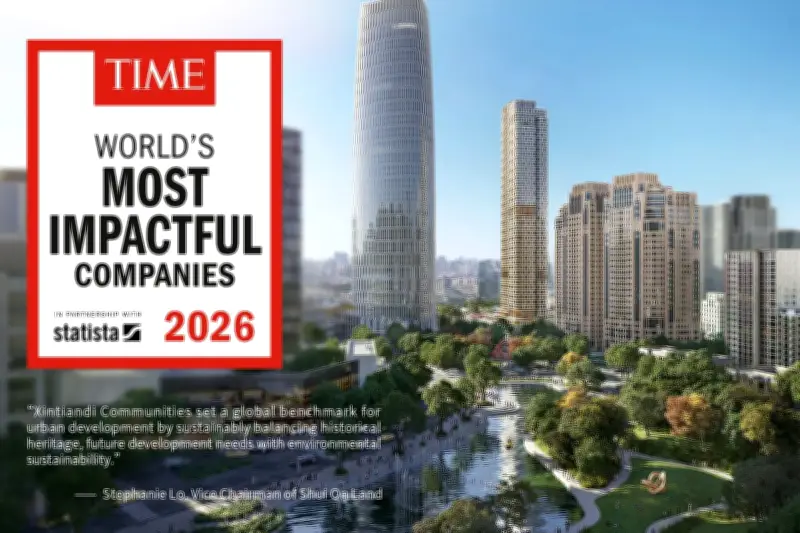
Shui On Land, the Hong Kong-listed property giant, is heading into 2026 with a transformative agenda that could redefine its future and the broader real estate landscape. As the company marks its 47th year in business, it is doubling down on an asset-light strategy aimed at reducing debt while enhancing its portfolio of cultural and mixed-use developments.
The group, founded by Vincent Lo in 1978, has long been synonymous with heritage-led urban regeneration. Its flagship 'Tiandi' brand, first introduced in Shanghai, has become a destination for both residents and tourists. By 2026, Shui On Land expects to have shuffled off a significant portion of its development risks, focusing instead on hospitality, retail, and office management.
A Cleaner Balance Sheet
One of the most telling metrics of this shift is the company's debt reduction. According to its latest annual report, total assets stood at 154 billion yuan, with net debt representing a high percentage of that total. Management has publicly committed to lowering this ratio to below 50% by the end of 2026, a goal that would require both asset disposals and strong operational cash flow.

The firm has already sold stakes in several completed projects while retaining management contracts. This allows Shui On Land to generate recurring income without carrying the heavy financial burden of development. These moves are expected to have a substantial impact on the company's bottom line in 2026.
A Portfolio of Prime Assets
Central to Shui On Land's appeal is its prime property portfolio. The group currently manages close to 2.7 million square meters of investment properties across key Chinese cities. This includes iconic locations such as the Shanghai Tiandi, where upscale apartments overlook stone-paved lanes and boutique retail stores.
In 2026, several new projects are set to come online, including a large-scale cultural complex in Wuhan and a new residential phase in Foshan. These developments are not just about floor space; they are strategic additions to a curated brand that emphasizes lifestyle and community.
Market Impact and Investor Sentiment
Shui On Land's pivot comes at a time when China's property sector is struggling with excess inventory and tumbling sales. By focusing on operational excellence rather than land banking, the company is positioning itself as a long-term player. Investors have taken notice, with the stock price showing resilience compared to peers.
For international investors, Shui On Land's approach offers a rare example of a developer that can generate shareholder value without relentless expansion. The company's ability to deliver strong cash flow from its existing portfolio is seen as a key indicator for future dividends.
Navigating Headwinds
Yet challenges remain. The company's commercial segment, particularly office spaces, has seen vacancy rates rise in cities like Shanghai. To counter this, Shui On Land is upgrading its properties and adding more leisure and hospitality elements, which are more sustained in terms of demand.
Furthermore, a potential global recession in 2026 could dampen consumer spending, affecting retail revenues. However, the company's diversified base, including residential sales, provides some buffer.
Why 2026 Matters
The significance of 2026 lies in the confluence of several factors. First, the completion of major refinancing exercises and asset disposals should provide the company with a more stable capital base. Second, the debut of new 'Tiandi' projects in tier-1 and tier-2 cities will test the brand's adaptability to changing market demands.
Moreover, Shui On Land's focus on environmental, social, and governance (ESG) criteria is increasingly aligned with global investment trends. By integrating sustainable practices into its new developments, the company aims to attract a new generation of ethically-minded tenants and buyers.
The Road Ahead
As the year unfolds, all eyes will be on Shui On Land's execution. If successful, the company's 2026 initiatives will not only set a new standard for Chinese developers but also provide a blueprint for sustainable urban living. The next twelve months will indeed be impactful.