
You have partied in Ibiza, eaten tapas in Marbella, and soaked up the sun in the Canaries. These destinations are popular for good reason, but they are also feeling the weight of overtourism. In Palma, guided walking tours have been limited to 20 people. Gran Canaria has introduced a list of banned beach items along with a £2,500 fine. In Malaga, short-term rentals have been restricted in 43 districts. If you are looking for somewhere new to visit, consider Galicia, a region in the northwest of Spain.
Over Easter, only 18% of visitors to the area were international tourists, primarily from Portugal, Germany, and France. Brits are slowly discovering this unique region, with The Times highlighting it as a brilliant holiday destination. Recent tourism figures show a 44% increase in UK travellers to the area in the first half of 2025.
Cíes Islands
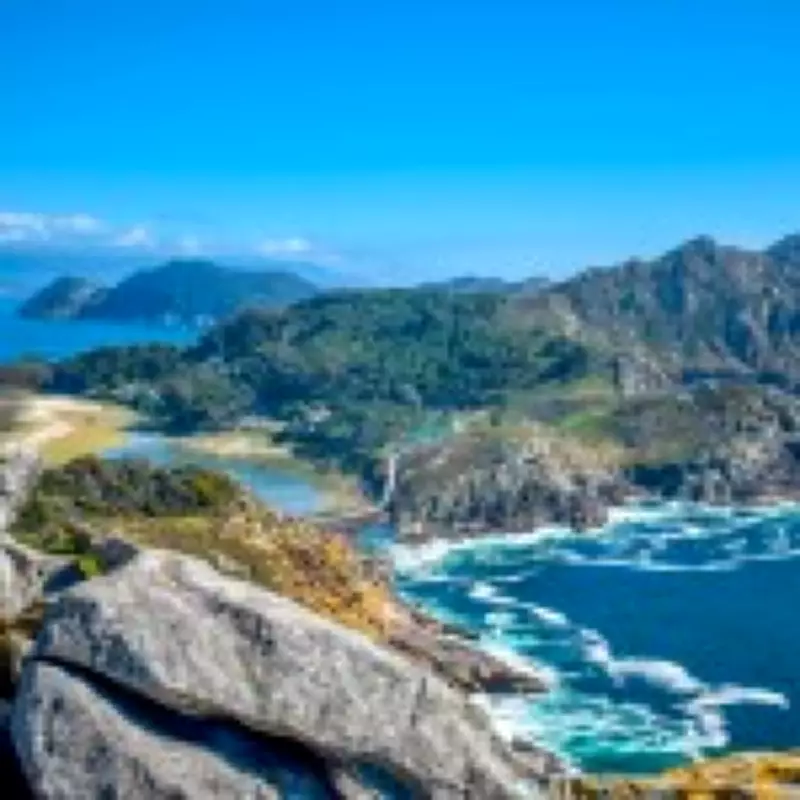
Nestled off Galicia's meandering Rías Baixas coast, the trio of Cíes Islands are often compared to the Caribbean for their deep-blue seas and beachy beauty. Part of the UNESCO-recognised Atlantic Islands of Galicia National Park, they were revered by the Romans as the islands of the Gods. Since 2017, the regional government has capped daily visitors: only 1,800 per day from 15 May to 15 September, dropping to 450 per day thereafter. Camping is allowed only from Semana Santa through September at the official campsite. Rodas Beach, named one of the best 50 beaches in the world, boasts white sands and crystal-clear, calm waters. More secluded options include Praia das Figueiras and Praia das Margaritas. Diving and canoeing are popular activities, and the Faro de Cíes lighthouse offers spectacular coastal views.
Pontevedra
With its Renaissance and Baroque architecture, exploring the narrow streets of Pontevedra feels like stepping back in time. Car access is severely restricted: in 1999, all 300,000 square metres of the medieval centre were pedestrianised. Without car horns, visitors can enjoy a laid-back atmosphere. The Old Town is one of the most beautiful and best preserved in Galicia, crammed with heritage buildings such as the Convent of San Domingos, the Basilica of Santa María la Mayor, and the Convent of San Francisco. For lunch, stop for tapas in Plaza de la Leña, filled with casual and fine-dining restaurants. A 20-minute drive along the coast leads to Combarro, a pretty fishing village with colourful flowerboxes and sandy beaches that rival the Caribbean.
A Coruña
The coastal city of A Coruña is described as mellow and one of the coolest places in Spain during summer. It is home to the Tower of Hercules, the world's oldest functioning Roman lighthouse, dating back to 1 AD and a UNESCO World Heritage site. Visitors can climb its 234 steps for panoramic Atlantic views (general admission €3). Sample local beer Estrella Galicia at the Estrella Galicia Museum, where a two-hour guided tour costs £29. Beach lovers have six urban beaches and several coves, with Praia de Riazor being the most popular, featuring a lively promenade with beach bars and tapas restaurants. Artabria, a few minutes from the promenade, is featured in the Michelin Guide and serves traditional dishes like rice with red shrimp and homemade seafood croquettes.
How to Get to Galicia
Aer Lingus launches summer flights from Cork to Santiago de Compostela from June 1, with fares averaging £67 and a direct flight time of 1 hour 55 minutes. Ryanair flies from London Stansted to Santiago de Compostela from as little as £15 one way, while Vueling from London Gatwick starts from £24.




