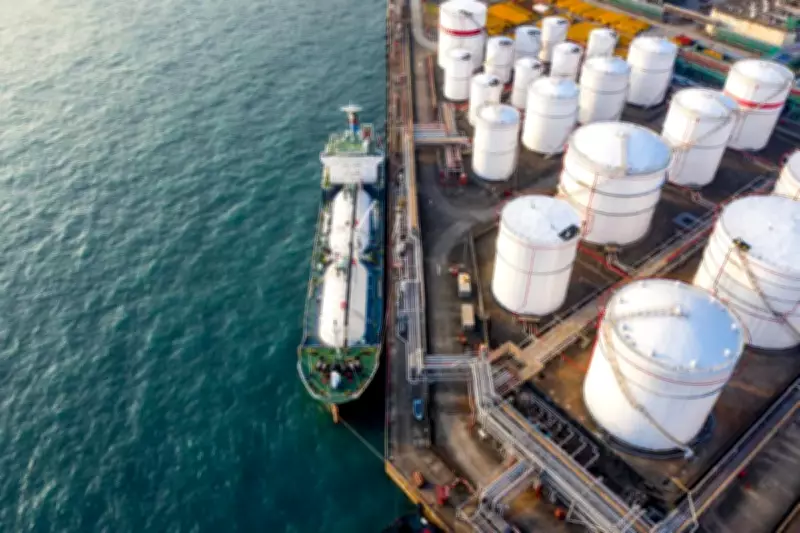
UK Gas Prices Skyrocket 93% Following Middle East Conflict Escalation
Gas prices in the United Kingdom have experienced a dramatic surge, increasing by an astonishing 93 percent this week alone as military tensions between the United States and Iran intensify across the Middle East region. The wholesale price of natural gas, which represents what energy suppliers pay producers before distribution to homes and businesses, briefly reached 151 pence per therm before settling around 148 pence.
Historic Price Levels and Immediate Economic Impact
This sudden spike marks the highest gas price level observed since February 2023, creating immediate concerns about broader economic consequences. The price escalation followed a 32 percent increase on Tuesday, which itself built upon a substantial 50 percent rise recorded just the previous day. Sanjay Raja, chief UK economist at Deutsche Bank, warned that this dramatic price flare-up could significantly raise inflation rates while simultaneously dampening economic growth across the country.
"Any further escalation would feed directly into risk premia, potentially disrupt freight operations, and trigger precautionary stock-building behaviors within both oil and gas markets," Raja emphasized, highlighting the interconnected nature of global energy markets.

Household Energy Bills Face Potential Crisis
The soaring wholesale gas prices have triggered urgent cost-of-living warnings, with electricity prices being directly tethered to gas market fluctuations. This connection means regulatory mechanisms like the energy price cap established by Ofgem could face upward adjustments, creating a direct knock-on effect for millions of British households. Analysts at financial firm Stifel issued a stark warning on Monday, noting that any sustained increase in wholesale gas prices would inevitably influence the next adjustment to Ofgem's price cap.
In a worst-case scenario involving a tripling of current prices, the annual energy price cap could potentially jump to approximately £2,500 from its current level of £1,641. Such an increase would represent the most severe spike since Russia's invasion of Ukraine disrupted global energy markets, placing unprecedented pressure on household budgets already strained by broader economic challenges.
Global Supply Chain Disruptions and Market Reactions
The initial surge in gas prices originated when a Qatari state energy company announced it had ceased production of liquified natural gas following what it described as "military attacks" by Iranian forces. This production facility represents the world's largest export plant for LNG, and its disruption poses dire consequences for European energy supplies. Qatar typically provides between 12 and 14 percent of Europe's total LNG imports, making this shutdown particularly significant for energy security across the continent.
Meanwhile, oil markets have mirrored this volatility, with prices extending their upward trajectory by 3.2 percent on Tuesday morning to reach $80 per barrel. Richard Hunter, head of markets at interactive investor, provided context for these movements, stating: "Oil price spikes typically follow conflict outbreaks, but the critical factor remains escalation and duration rather than immediate outlook. Many nations have accumulated strategic stockpiles that could potentially see them through the coming months of uncertainty."
The convergence of these factors—geopolitical conflict, production disruptions, and market volatility—creates a perfect storm for UK energy consumers, with analysts closely monitoring whether temporary price spikes will evolve into sustained increases that fundamentally reshape the country's economic landscape in the weeks and months ahead.