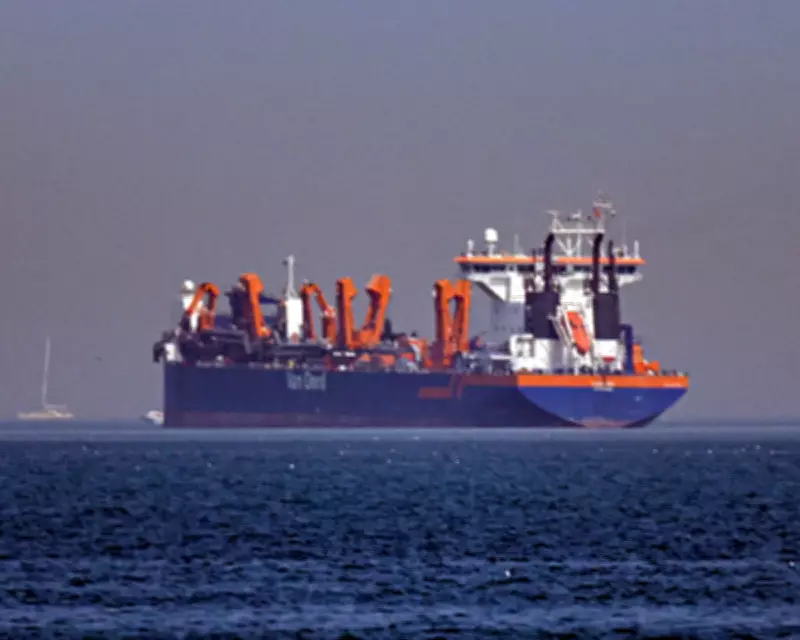
Analysts are issuing stark warnings that the escalating tensions between the US, Israel, and Iran could propel global oil prices to a staggering $100 per barrel. This alarming forecast centers on the critical Strait of Hormuz, where tanker traffic has been effectively halted, creating a severe bottleneck for global energy supplies.
Immediate Impact on Global Energy Markets
Consultancy firm Wood Mackenzie has stated that higher oil and gas prices are now a certainty. The firm warns that crude prices could potentially exceed the $100 per barrel threshold if transit flows through the strategic Strait of Hormuz are not restored swiftly. The disruption follows Iran's warnings to shipping away from the vital waterway and the subsequent withdrawal of insurance coverage by major providers, leaving tankers stranded and trade flows paralyzed.
Expert Analysis from Wood Mackenzie
According to Alan Gelder, Senior Vice President of Refining, Chemicals and Oil Markets at Wood Mackenzie, the current scenario poses a significant threat. "In the current scenario, oil prices over US$100/bbl are possible if transit flows are not re-established quickly," Gelder emphasized. He detailed that the key uncertainty revolves around the timeline for vessels to resume normal export operations.

Gelder further explained, "No doubt, tanker rates and insurance will increase dramatically, but these costs would only be a small part of the oil price impact associated with a curtailment of oil flows if they last for more than a few days." Even under an optimistic assumption where Iran cooperates with the United States, Gelder noted it could still take several weeks for export flows to normalize. "During that time, oil prices are heavily risked to the upside," he added.
Historical Precedent and Market Comparisons
Drawing a parallel to recent market turmoil, Gelder pointed to the early days of the Russia-Ukraine conflict as a relevant comparison. "The most recent comparison is during the early days of the Russia/Ukraine conflict, when the fear of loss of Russian supplies drove the oil price to over US$125/bbl," he stated. Brent crude oil last traded at the $100 per barrel mark in 2022, precisely during the initial phase of that war, underscoring how geopolitical crises can trigger sharp price surges.
Broader Implications for the Economy
The potential for oil to reach $100 a barrel carries profound implications:
- Increased costs for transportation and manufacturing sectors worldwide.
- Higher inflationary pressures on consumer goods and services.
- Volatility in global stock markets and currency exchanges.
- Strategic recalculations for energy-dependent nations and industries.
As the situation in the Strait of Hormuz remains fluid, market watchers and policymakers are bracing for a prolonged period of uncertainty. The halt in tanker traffic not only disrupts immediate supply chains but also injects a premium of risk into global energy pricing, with Wood Mackenzie's analysis suggesting that the road to stabilization may be measured in weeks rather than days.