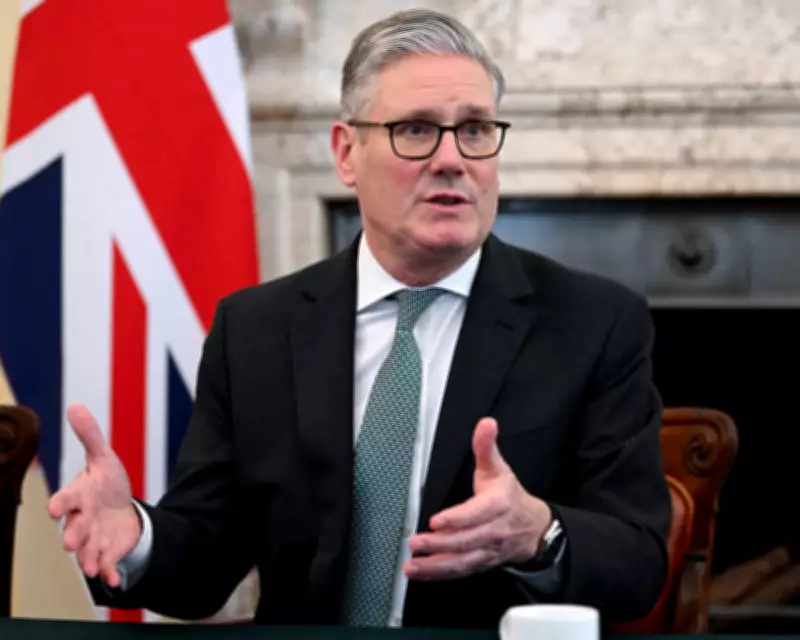
Starmer's Energy Plan Faces Scrutiny Amid Middle East Tensions
Prime Minister Keir Starmer presented what he called a "five-point plan for the immediate crisis" during remarks from 10 Downing Street on Wednesday, addressing the escalating US-Israeli conflict with Iran and its potential impact on the Strait of Hormuz. However, analysis reveals that most of these points were previously announced measures rather than new responses to the Middle East situation.
Repackaged Budget Measures
Two of Starmer's five points were energy bill measures that pre-date the current Iran conflict. The first point claimed "We're cutting energy bills by over £100 per household today," referring to Chancellor Rachel Reeves' November budget announcement about shifting green levies into general taxation. Originally presented as a £150 cut, this has since been reduced to approximately £117 for average dual-fuel households due to rising grid maintenance charges.
The second point extended the fuel duty cut until September, another measure announced in November's budget. While few expect the scheduled 1p per litre increase to proceed in September, this cannot be presented as a new response to Middle East tensions.

Limited New Support
The third point allocated £53 million to support people affected by heating oil price increases, representing the only genuinely new element responding to the immediate crisis. However, significant questions remain about who might receive targeted support for gas and electricity bills when impacts are felt from October, how assistance would be delivered, and how edge cases would be handled.
Financial analysts note that £53 million would be negligible if the government needs to find billions to address a full-scale energy crisis. The timing, delivery mechanisms, and eligibility criteria for any expanded support remain undefined.
Long-Term Strategy Presented as Crisis Response
Starmer's fourth point emphasized taking control of energy security through investment in clean British energy, essentially restating the government's existing Clean Power 2030 strategy. This £200 billion infrastructure project cannot be accelerated in response to current Middle East tensions, with nuclear plants requiring at least a decade to build and new wind farms not operational until 2028-2029.
Energy analysts project that consumer savings from cleaner energy systems won't materialize until around 2040, assuming the government continues loading costs onto bills. Furthermore, gas-fired generation will remain necessary as backup for intermittent renewable sources, meaning complete independence from fossil fuel volatility remains elusive.
Diplomatic Efforts and Fiscal Realities
The final point called for continued de-escalation efforts in the Middle East, an uncontentious position given that oil and gas price normalization will significantly determine the UK's economic impact. However, this diplomatic stance doesn't constitute a concrete plan for domestic energy security.
The real challenge would emerge if an energy price shock transforms into a supply shock, potentially requiring rationing measures. At that point, Chancellor Reeves would face difficult decisions about utilizing fiscal headroom to protect consumers and the economy.
While previous energy crises have presented complex policy dilemmas, critics argue that repackaging measures from last November's budget does not constitute a genuine five-point plan for addressing the immediate threats posed by Middle East conflicts and their impact on global energy markets through critical chokepoints like the Strait of Hormuz.