UK Petrol Stations See Growing Queues as Middle East Tensions Disrupt Oil Supplies
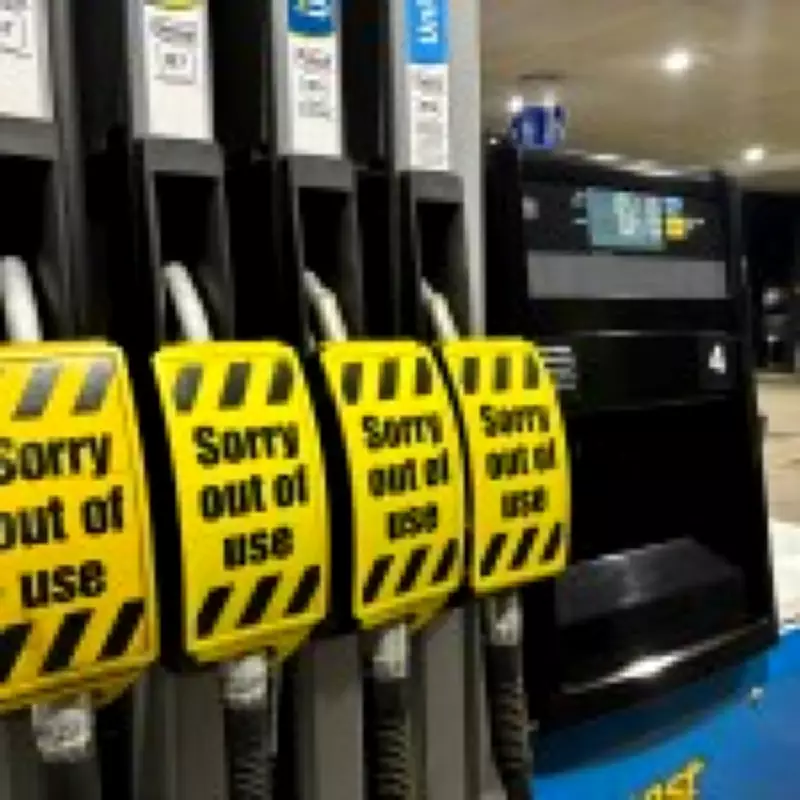
Signs reading 'Sorry we are out' are increasingly appearing at petrol stations across the United Kingdom, as fears mount over potential price surges and supply disruptions. This situation stems from escalating conflict in the Middle East, which has forced major oil companies to suspend shipments through the critical Strait of Hormuz.
Conflict Triggers Global Oil Supply Disruption
The Strait of Hormuz, a vital maritime chokepoint handling approximately 20% of the world's oil and gas supplies, has become a flashpoint. Retaliation attacks by Iran followed the death of Supreme Leader Ayatollah Ali Khamenei in US-Israel strikes known as 'Operation Epic Fury'. In response, Iran has launched missile attacks on countries including the United Arab Emirates, Kuwait, Bahrain, and Qatar.
On Sunday morning, two ships in the Strait were struck by projectile missiles, leaving one vessel ablaze and four mariners injured. This incident has prompted the world's largest oil exporters to halt journeys, directly impacting UK fuel availability and leading to hour-long queues at pumps nationwide.

Is Petrol Running Out in the UK?
Currently, the UK's petrol supply is not depleted, but drivers are stockpiling against official advice. The AA has urged motorists not to panic buy, as global oil prices have surged dramatically. The benchmark Brent crude oil increased by 13%, reaching its highest level since July 2024.
Despite these warnings, long queues have been observed in areas such as Greater Manchester, where dozens of vehicles waited at the Trafford Centre, and in Kirkdale, Liverpool, where lines extended beyond stations into nearby roads.
Will Petrol Prices Increase Significantly?
Oil prices jumped by 13% yesterday, with Brent crude briefly hitting $82 a barrel—the highest since January last year—before settling at $79 by early morning. Insurers are now reportedly refusing coverage for ships navigating the Strait, and the US has indicated it cannot guarantee safety, predicting disruptions could last for days.
Ali Vaez, director of the Iran Project, warned: 'Closure of the Strait of Hormuz would disrupt roughly a fifth of globally traded oil overnight—and prices wouldn't just spike, they would gap violently upward on fear alone. The shock would reverberate far beyond energy markets, tightening financial conditions, fuelling inflation and pushing fragile economies closer to recession in a matter of weeks.'
However, experts express cautious optimism regarding the UK's situation. RAC head of policy Simon Williams stated: 'While the conflict in the Middle East undoubtedly has the potential to push up pump prices in the UK, it's not a certainty. The oil price would have to rise significantly and stay that way for some time to have a dramatic effect.'
Williams suggested that oil prices reaching $100 per barrel could push petrol prices nearer to 150p per litre, but emphasized it is 'all too soon to know'.
Government Response and Monitoring
The Prime Minister's official spokesman confirmed: 'The Government is monitoring the situation closely. The UK benefits from strong and diverse security of energy supplies.' Energy Secretary Ed Miliband engaged with Dr. Fatih Birol, executive director of the International Energy Agency, over the weekend to assess developments.
The spokesman added: 'There are currently no reported impacts to UK fuel supply. DESNZ (the Department for Energy Security and Net Zero) will continue to monitor UK fuel stocks and sales.' This reassurance aims to curb panic buying and stabilize market expectations amid the ongoing crisis.