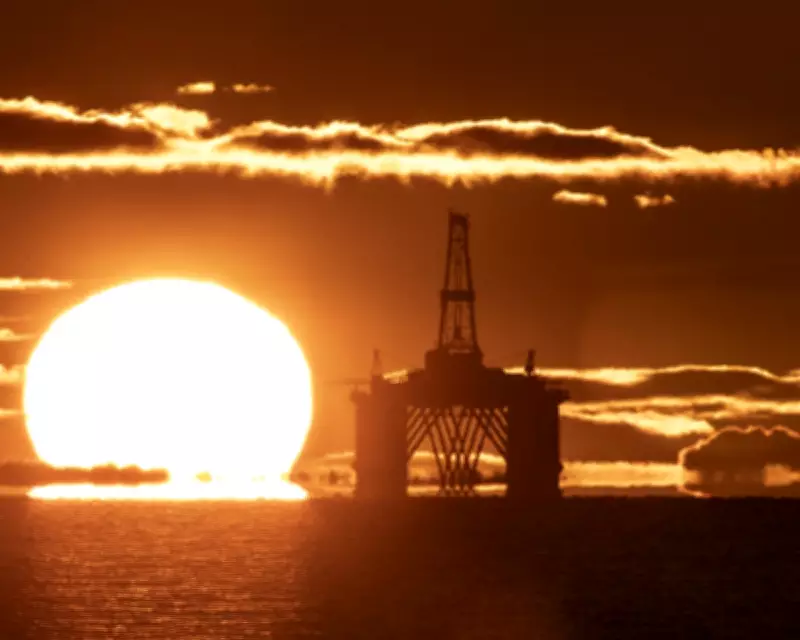
North Sea Oil Licenses Yield Only 36 Days of Gas, Challenging Tory Energy Claims
Hundreds of oil and gas licenses issued in the North Sea by the Conservative government have resulted in a mere 36 days' worth of gas production, according to exclusive research. This finding casts significant doubt on political assertions that new drilling would enhance energy security and reduce household bills.
Minimal Output from Extensive Licensing
Between 2010 and 2024, the government conducted seven licensing rounds, granting hundreds of new permits for North Sea projects. Analysis by the energy consultancy Voar and the campaign group Uplift shows that these licenses have led to 20 new or relicensed fields. Over their entire lifespan, these fields are projected to produce enough gas to supply the UK for only six months, with current output equivalent to just 36 days of extra gas.
Tessa Khan, executive director of Uplift, criticized right-wing politicians and the oil industry for misleading the public. "Some politicians are trying to sell us a dangerous fantasy of endless gas reserves, when the truth is – after 50 years of drilling – we have already burned most of it," Khan stated. "A month's worth of gas from 14 years of licensing by the last government shows the complete folly of pursuing this policy. It's barely enough gas to last from now until May Day."

Political Debate Intensifies Amid Energy Crisis
The debate over UK energy policy has intensified due to rising energy prices, partly driven by conflicts such as the US-Israeli war in Iran. Labour's proposal to ban new oil and gas licensing and focus on homegrown renewable energy has garnered support from economists and climate experts. However, it faces criticism from figures like Kemi Badenoch and Nigel Farage.
Farage, leader of Reform UK, urged the prime minister to "open up the licences, and become self-sufficient in natural gas." Badenoch claimed that drilling in the North Sea and expanding other energy sources is the only way to protect families from rising bills. Yet, experts label the North Sea as a "mature basin" with output declining by 75% since its peak and 90% of reserves already depleted.
Limited Impact on Bills and Energy Security
New licenses are unlikely to affect energy bills because gas prices are set by international markets. Official data indicates that additional drilling would have a minimal effect on the UK's reliance on imported gas. Instead, campaigners advocate for renewable energy and home improvements as more effective solutions.
"New drilling would not take a penny off our bills, something even the industry has conceded," Khan emphasized. "The only way to insulate ourselves from oil shocks is to double down on renewables and upgrade homes, so we can free ourselves from fossil fuels. This is just common sense in today's world."
Jess Ralston, head of energy at the Energy and Climate Intelligence Unit, described issuing more licenses as a "sticking plaster" that fails to help consumers. "The reality is that we've drained dry around 90% of oil and gas there," Ralston said. "To stop the UK being so vulnerable to energy crises, often sparked by war, lowering fossil fuel demand through electric vehicles, heat pumps and renewables remains the most credible long-term solution."
The Conservative party has been contacted for comment on these findings.