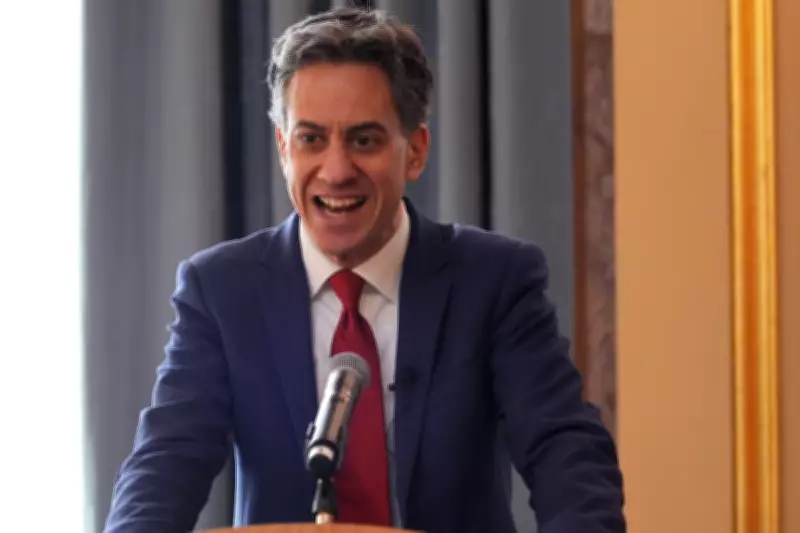
Energy Secretary Ed Miliband Rejects Calls for North Sea Oil Drilling Amid Crisis
Energy Secretary Ed Miliband has firmly dismissed mounting calls for the United Kingdom to exploit the North Sea's oil reserves, despite escalating fears of an energy shock driven by the ongoing war in the Middle East. The senior Labour figure pushed back against industry and political pressure, labeling arguments that increased drilling would lower prices as "totally false."
Industry and Political Pressure Intensifies
The rejection comes after Make UK, the influential industry body representing thousands of manufacturers across the nation, issued a public statement urging Miliband to grant approval for North Sea drilling. The organization warned that failure to do so could trigger a dangerous spike in energy costs, further straining the UK economy.
Adding to the pressure, Greg Jackson, the chief executive of energy giant Octopus and a member of the government's industrial strategy advisory council, publicly cautioned about potential "economic damage" from the unfolding crisis in the Gulf. In a recent column for the Telegraph, Jackson argued that the government must abandon "wishful thinking" and "ideology" to maintain price stability and keep the economy afloat.

Geopolitical Tensions Drive Oil Price Surge
The price of oil has surged dramatically, settling above $103 per barrel this week. This spike is primarily attributed to Iran's blockade of the Strait of Hormuz, a critical narrow waterway through which approximately one-fifth of the world's global oil supply flows.
In a Sunday interview with Sky News, Miliband addressed the geopolitical situation, stating, "[The government wants to] work with our allies to get the Strait reopened." He outlined potential measures, including the deployment of autonomous mine-hunting equipment, confirming that such options are "obviously" under active consideration by authorities.
International Criticism and Domestic Support Measures
The UK's continued reluctance to authorize new drilling in the North Sea has even drawn sharp criticism from former US President Donald Trump. During a fiery speech at the World Economic Forum in Davos earlier this year, Trump launched a pointed attack, noting, "The UK produces one third of the total energy from all sources that it did in 1999. They are sitting on top of North Sea oil, one of the greatest reserves anywhere in the world."
On the domestic front, Chancellor Rachel Reeves is reportedly preparing to unveil a targeted support package for poorer households. This package, expected to include energy subsidies, aims to assist those not covered by the existing energy price cap, such as rural communities reliant on heating oil. Reeves hinted at implementing different tiers of support, telling the Times she had "found the money" for the initiative after inheriting a challenging fiscal situation.
Crackdown on Price Gouging and Market Tensions
Miliband has vowed that the government will "fight people's corner" and has strongly criticized instances of "price gouging" at petrol stations. This stance led to significant tension earlier this week when petrol retailers threatened to boycott a scheduled meeting at 11 Downing Street. Retailers claimed that the government's warnings against "price gouging" had resulted in forecourt staff facing abuse from the public.
The controversy erupted after Miliband issued a stern warning against potential price "rip-offs," cautioning that some retailers might exploit the war in Iran to unjustifiably hike fuel prices. In a related move, Chancellor Reeves has instructed the UK's competition watchdog to rigorously investigate and crack down on any companies "exploiting the current situation to make excess profits at consumers' expense."

Gordon Balmer, Executive Director of the Petrol Retailers Association, defended the industry, stating, "Our members are working hard in difficult circumstances making sure that motorists and businesses are getting the fuel they need, at prices that are very competitive, on razor thin or in some cases negative margins which means they are losing money." He emphasized the need for better understanding of the fuel market, adding, "There is clearly still a lot of work to do to help politicians and commentators to understand how the fuel market works and our door is always open for constructive dialogue."