Middle East Oilfield Shutdowns Threaten to Keep Global Oil Prices High
The world's largest offshore oilfield, Saudi Arabia's Safaniya, has been shut down this week after nearly seventy years of continuous operation, marking a critical moment in an escalating global energy crisis. This massive field, stretching over forty miles into the Persian Gulf, normally produces millions of barrels of heavy crude annually for the world's biggest oil-producing nation.
War in Iran Blocks Vital Shipping Route
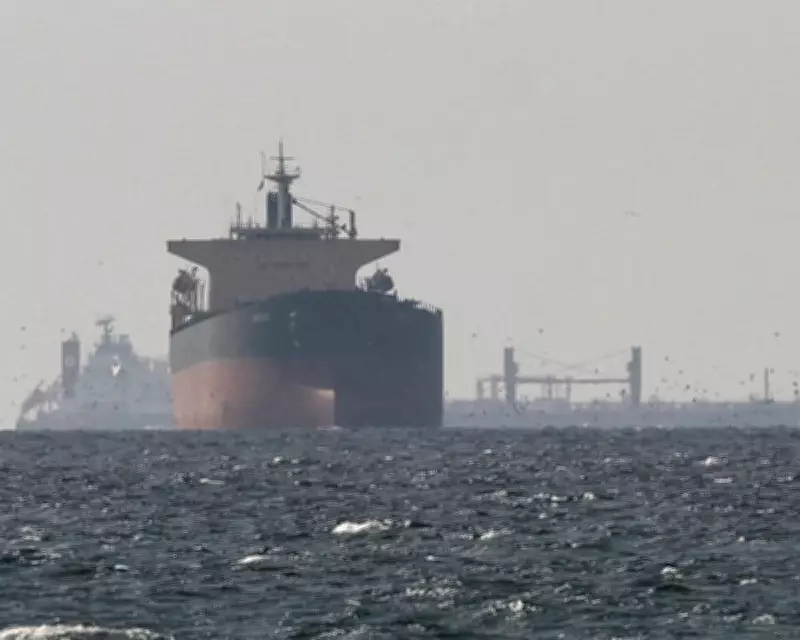
The ongoing war in Iran has effectively blocked the Strait of Hormuz, preventing Gulf states from exporting approximately one-fifth of the world's oil supply to international markets. Iranian attacks on tankers trapped in this vital trade route have already removed an estimated fifteen million barrels of oil from global circulation, creating severe supply constraints.
Beyond the immediate spectacle of burning tankers in the narrow waterway south of Iran lies a more insidious threat that could compound what analysts are calling the greatest energy supply shock in modern history. The real danger now centers on potential widespread shutdowns of major oilfields across the region, which could keep prices elevated for households and businesses for an extended period.

Record Prices Loom as Production Halts
In worst-case scenarios, energy analysts forecast that oil prices could surpass the 2008 record of $147.50 per barrel. While Brent crude prices retreated from recent highs of $119 per barrel this week amid discussions of strategic reserve releases, they have already climbed back above $100 as production facilities across Saudi Arabia, Iraq, and Kuwait have gone offline.
The International Energy Agency estimates that temporary closures of oil and gas wells, combined with damage to critical energy infrastructure, could reduce daily production by ten million barrels. This substantial reduction comes as global storage capacity approaches its limits, forcing producers to consider shutting down operations entirely when pipelines and stockpiles reach maximum capacity.
Natural Gas Supplies Also Disrupted
The conflict has severely impacted global natural gas supplies alongside oil production. Qatar, which provides approximately twenty percent of the world's seaborne liquefied natural gas cargoes, was forced to shut down its LNG production facilities following Iranian attacks. European gas prices responded by soaring about eighty percent to highs exceeding €56 per megawatt hour last week.
Qatari Energy Minister Saad al-Kaabi told the Financial Times that restoring normal delivery schedules would require "weeks to months" even if hostilities ceased immediately. He warned that the continuing crisis threatens to destabilize economies worldwide through sustained energy price inflation.
Technical Challenges of Restarting Production
Restarting shuttered oilfields presents enormous technical challenges that could prolong supply disruptions. The process of returning a field to full production can take weeks or months depending on infrastructure conditions and geological factors. Some fields may never fully recover their previous output levels.
"Restarting field production of this scale will be a massive technical exercise," explains Jim Burkhard, global head of crude oil research for S&P Global Energy. "Depending on the reservoir and how long it remains shut in, it could take weeks, months, or more to fully restore output."
Pipeline Alternatives Reach Their Limits
Saudi Arabia's state-owned Aramco has attempted to reassure markets by redirecting crude through pipelines to Red Sea ports, potentially exporting up to seventy percent of normal output. The company has doubled pipeline volumes from 1.5 million to 3 million barrels daily, with plans to reach 5 million barrels soon.
However, energy market specialists warn that pipeline alternatives have severe limitations. The United Arab Emirates will still have one million barrels daily that cannot be sold via pipeline with less than twenty days of storage available. Saudi Arabia faces similar constraints, potentially needing to shut down both Safaniya and the Zuluf field while managing only about seven days of storage capacity.

"Additionally, Iraq, Kuwait, and Iran itself have no pipeline capacity to bypass the strait," notes Ajay Parmar, a director at energy market specialists ICIS. Iraq's southern oilfields have seen production plummet from 4.3 million to just 1.3 million barrels daily with less than five days of storage remaining.
Aging Infrastructure Complicates Recovery
Questions surround whether Saudi Arabia's aging Safaniya field, which began production in 1957, can return to previous output levels. Yet experts caution against underestimating the technical capabilities of Middle Eastern oil producers.
"Saudi oilfield and refining capabilities are extremely high-end," Parmar observes. "It would not surprise me if the company was indeed able to return the field back to previous capacity levels over time, despite the current challenges."
With Gulf storage facilities nearing exhaustion and no resolution to the Hormuz blockade in sight, the world's richest oil-producing region faces difficult decisions about further production cuts. These shutdowns now represent the primary driver behind oil's upward price trajectory, threatening to extend energy market volatility well into the future.