Iran Conflict Triggers Global Gas Price Surge, Threatening Australian Energy Bills
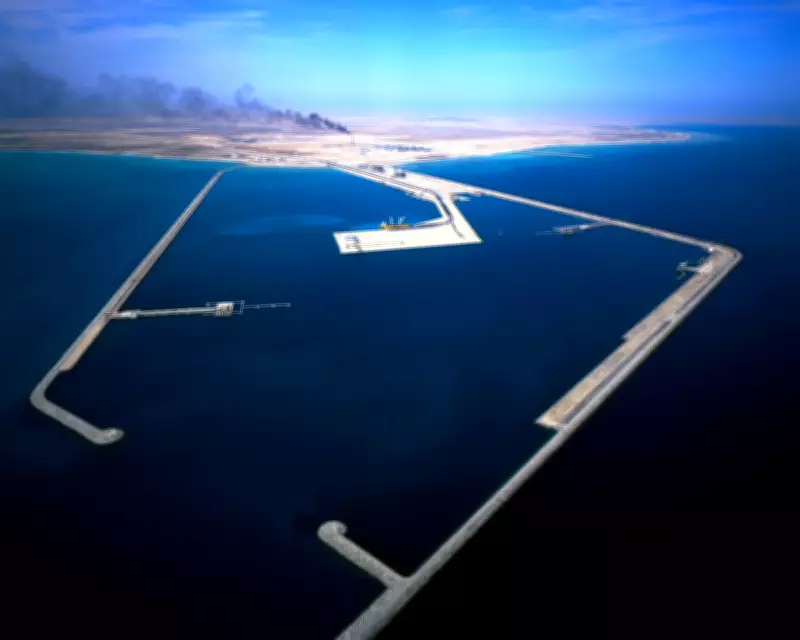
Global gas prices have skyrocketed by up to 50% following Qatar's shutdown of liquefied natural gas (LNG) production after Iranian drone attacks targeted its Ras Laffan complex. This dramatic escalation in the Middle East conflict has raised alarms among energy experts, who warn of potential parallels to the 2022 energy shock triggered by Russia's invasion of Ukraine, which forced Australian electricity prices up by more than 40%.
Immediate Impact on Global Markets
The decision by Qatar, the world's third-largest LNG exporter, to halt production sent shockwaves through international energy markets. Wholesale gas prices surged by approximately 50% in Europe and approached 40% in Asia, reminiscent of the chaos unleashed four years ago. Concurrently, US-Israeli missile strikes have severely disrupted shipping through the Strait of Hormuz, a critical passage for about one-fifth of global seaborne oil and gas.
Kevin Morrison, an LNG and gas analyst at the Institute for Energy, Economics and Financial Analysis, highlighted the disproportionate impact on gas compared to oil. "Gas on global markets has experienced a much more dramatic increase than the price of oil," Morrison stated. "The market is signaling fears that the conflict's impact will be significantly greater for gas than for oil."

Australian Vulnerability to International Price Volatility
Australian wholesale gas prices have tripled over the past decade, largely due to the commencement of major LNG export terminals in Queensland that linked domestic prices to the more expensive and volatile international market. Following Russia's invasion of Ukraine, national household gas and electricity prices jumped by 27% and 43%, respectively, in the year to March 2023, while gas prices for manufacturers surged 46%.
Morrison noted similarities between the current situation and the 2022 crisis. "We have a major global gas supplier being knocked out, so the threat is real. We were entering a period where gas prices were expected to decline, but the conditions are now ripe for a prolonged price spike," he explained. "Australia remains highly exposed to international prices, which could lead to domestic gas price increases that filter through to electricity, given the strong correlation between them."
Government Measures and Expert Skepticism
The Australian government has announced a domestic gas reservation scheme, set to begin next year, which will require LNG exporters to allocate up to a quarter of their gas for domestic use. A spokesperson for Resources Minister Madeleine King emphasized that steps like the $12/GJ reasonable pricing mechanism under the gas market code have "insulated the domestic market from extreme price spikes, such as those that occurred due to Russia's illegal invasion of Ukraine." The spokesperson added that the domestic gas market is predicted to be "well supplied" in 2026, but the government continues to monitor the situation closely.
However, Tony Wood, a senior fellow at the Grattan Institute's energy and climate change program, expressed skepticism about the effectiveness of recent government actions. "The measures taken over recent years have not completely severed the link between global and domestic gas prices," Wood argued. "The current conflict will pressure the government to adopt a more heavy-handed approach to ensure domestic supply and prevent prices from reflecting irrational international spikes."
Wood further cautioned against optimism, drawing parallels to the prolonged nature of the Ukraine conflict. "Many initially believed the Ukraine war would be short and sharp, but here we are four and a half years later. Just as expectations were shifting toward declining LNG prices, this conflict may derail that trajectory," he concluded.