Historic Oil Supply Disruption Unfolds as Iran Intensifies Blockade
The International Energy Agency has issued a stark warning that global oil markets now face the largest supply disruption in recorded history, surpassing even the shocks of the 1973 Yom Kippur war and the 2022 Ukraine invasion. This unprecedented crisis stems directly from Iran's effective blockade of the vital Strait of Hormuz, which has halted millions of barrels of daily crude shipments and triggered emergency responses worldwide.
Emergency Measures Fail to Quell Market Fears
In a dramatic attempt to stabilize markets, the IEA coordinated the largest release of government reserves in its 50-year history on Wednesday. All 32 member nations unanimously agreed to unleash 400 million barrels of emergency crude, while the United States separately committed to releasing 172 million barrels from its strategic petroleum reserve. Despite these extraordinary measures, Brent crude prices surged past $100 per barrel on Thursday, briefly reaching $101 before settling at elevated levels.
This marks only the fifth coordinated strategic release since the IEA's founding in 1974, with previous emergencies including the 1991 Gulf War, Hurricane Katrina in 2005, the 2011 Libyan intervention, and the 2022 Ukraine war. The current crisis has proven more resistant to intervention, with Iranian military officials openly taunting Western nations about potential $200 per barrel prices.

Regional Production Collapse and Global Consequences
The IEA's Thursday assessment revealed devastating numbers: Middle East oil and gas production has already dropped by at least 10 million barrels daily, with projections indicating an 8 million barrel per day global output slump this year. Critical infrastructure damage across the region has forced producers to shutter operations as storage facilities reach capacity and exports through the Strait of Hormuz cease entirely.
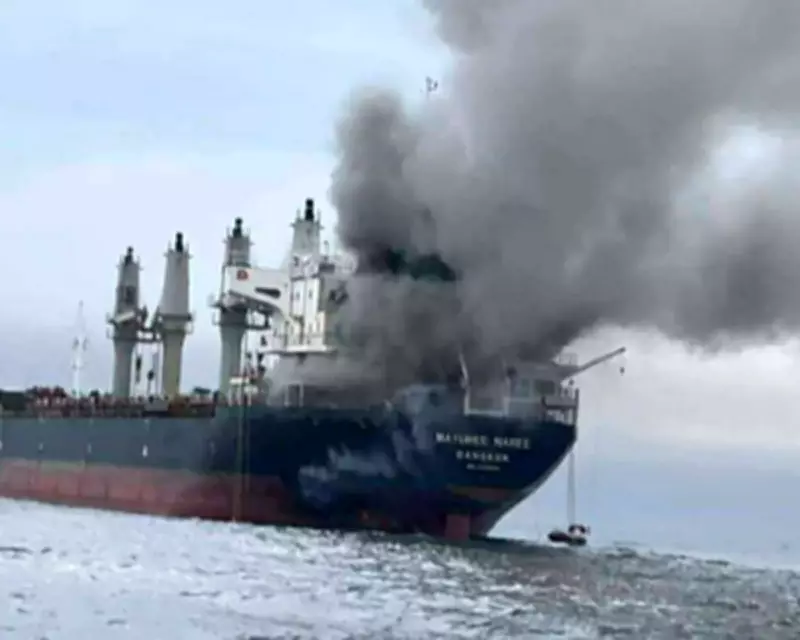
Regional chaos has spread far beyond Iran's borders. Iraq suspended all oil port operations following tanker attacks, Bahrain advised residents to shelter after fuel tank strikes, and Oman relocated vessels from its Mina Al Fahal export terminal following drone assaults. Multiple merchant ships have been struck in and around the strategic waterway that normally carries about one-fifth of global oil shipments.
Market Turmoil and Economic Fallout
Financial markets reacted violently to the escalating crisis. Wall Street opened significantly lower, with the Dow dropping 1.1% and the S&P 500 falling nearly 1%. European indices followed suit, while Japan's Nikkei 225 and Australia's S&P ASX 200 both declined 1.3%. The supply shock has overwhelmed the IEA's revised demand forecasts, which already accounted for 1 million fewer barrels daily due to reduced Middle East refining and air travel.
Brent crude's wild fluctuations tell the story of market panic: after beginning the year around $60 per barrel, prices broke the $100 threshold on Monday, soaring 29% to a $119 peak before volatile trading resumed. The IEA cautioned that soaring energy costs will inevitably suppress global economic growth, though the full impact remains difficult to quantify as the conflict continues to escalate.
Political Dimensions Complicate Resolution
The crisis deepened politically when Iran's new supreme leader, Mojtaba Khamenei, issued his first public statement calling for the Strait of Hormuz to "remain closed," dashing hopes for near-term resolution. This declaration followed former President Donald Trump's Wednesday vow to "finish the job" regarding the US-Israel campaign against Iran, prompting intensified retaliatory strikes on economic targets across the Middle East.
As the world's most important oil transit chokepoint remains effectively sealed, analysts warn that the current supply disruption represents not merely a temporary market adjustment but a fundamental reshaping of global energy security paradigms. With strategic reserves being depleted and production capabilities damaged, the crisis may have lasting consequences far beyond immediate price spikes.