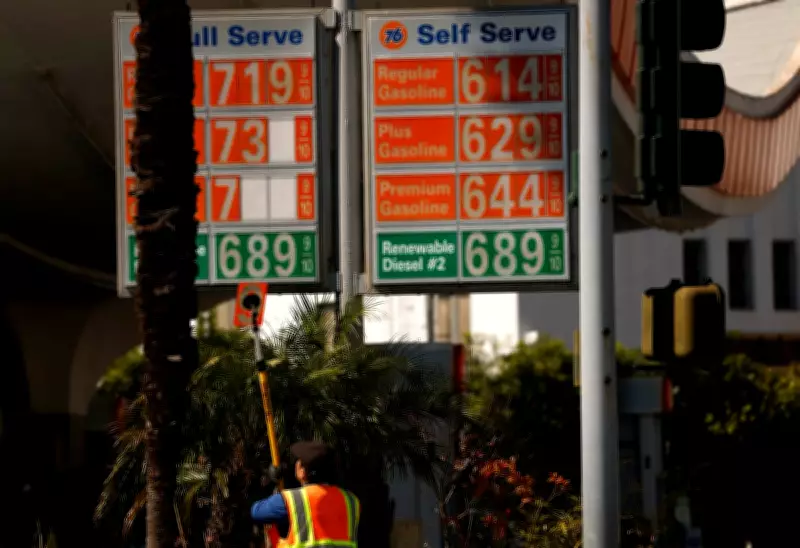
Gas prices across the United States are experiencing a dramatic surge as the war in Iran extends into its third week, creating significant volatility in global oil markets and putting pressure on consumers at the pump. A worker was photographed adjusting prices at a 76 station in Beverly Hills, California, on March 11, 2026, symbolizing the rapid increases seen nationwide. Brent crude, the international benchmark for oil, is currently trading at over $90 per barrel, reflecting the ongoing instability.
Wild Fluctuations in Oil Prices Amid Escalating Conflict
US oil prices are expected to see another day of wild fluctuations as the US-Israel campaign against Iran continues. Petroleum prices have spiraled upward due to the broadening conflict, which has imperiled critical oil and gas production infrastructure in the region. On Friday, the US conducted strikes on Kharg Island, a vital oil processing hub in Iran, while Tehran has been blocking ships from passing through the Strait of Hormuz. This strategic waterway typically handles about one-fifth of the international oil supply, making the blockade a major disruption.
Analyst Predictions and Current Price Trends
Patrick De Haan, a leading petroleum analyst, predicted on Monday that the average US cost of gasoline could reach $3.80 to $3.85 per gallon, with the possibility of hitting $4 in the near future. He noted that diesel, used by trucks and trains, could climb to $5.05 to $5.15 per gallon countrywide. Brent crude increased to $106 per barrel early Monday before dipping to $103, while US crude briefly hit $100 per barrel on Sunday before falling to $94 by mid-morning.

The average cost of regular gasoline in the US was below $3 per gallon on February 28, when the initial strikes on Iran occurred. Since then, it has risen to $3.70, marking a 23% increase in just under three weeks, according to Consumer Reports. However, some regions have seen far more dramatic upticks. In California, averages have exceeded $5 per gallon, with some Los Angeles gas stations charging over $8 per gallon, highlighting the uneven impact across the country.
Impact on Wall Street and Oil Company Concerns
Fluctuating oil prices continued to shake a jittery Wall Street on Monday. Stocks opened higher after news of lower oil prices, with the S&P 500 up about 1% at 11am ET. Top oil company stocks are experiencing minor fluctuations, though shares in major petroleum outfits have reached all-time highs overall since the conflict began, according to the Wall Street Journal.
Executives from several oil companies have reportedly warned White House officials that the logjam in the Strait of Hormuz could worsen conditions. Darren Woods, Exxon's CEO, told officials that prices could continue to increase if there are supply issues with refined oil and gas, and he warned that speculators could drive up prices further. Executives from Conoco and Chevron also voiced concerns about the broadening interruption, emphasizing the potential for prolonged market instability.
Looking Ahead: Potential for Further Increases
As the war in Iran drags on, analysts and industry leaders are closely monitoring the situation for signs of further escalation. The combination of military actions, supply chain disruptions, and speculative trading is creating a perfect storm for rising fuel costs. Consumers are advised to brace for potential price hikes, with experts suggesting that the national average could soon breach the $4 per gallon threshold if current trends persist.
This ongoing crisis underscores the interconnectedness of global geopolitics and local economies, as events thousands of miles away directly impact everyday expenses for Americans. The situation remains fluid, with oil prices likely to continue their volatile trajectory in the coming days and weeks.