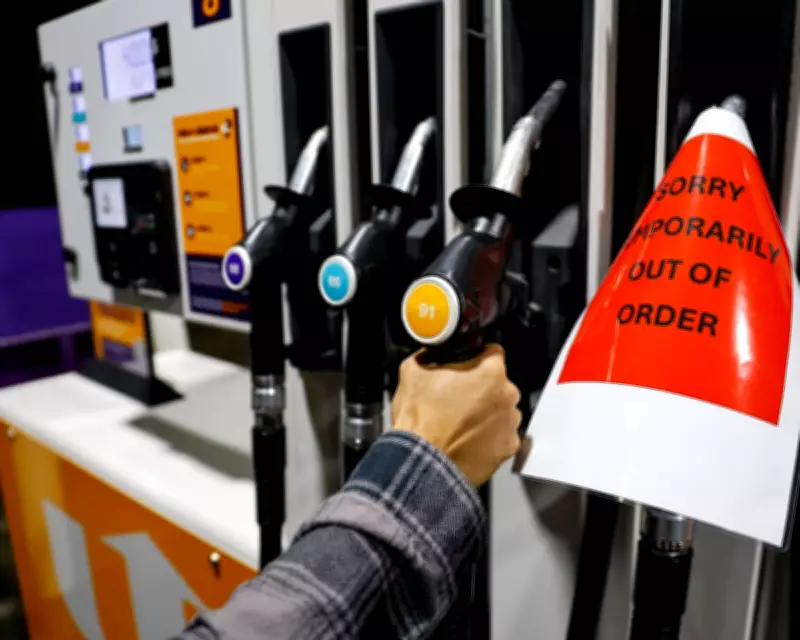
Fuel Price Relief Delayed: Excise Cut May Take Weeks to Reach Pumps
Australians anticipating immediate relief from soaring fuel prices ahead of Easter travel are likely to face disappointment, as industry experts warn that the effects of the federal government's temporary excise reduction could take days or even weeks to manifest at service stations nationwide. The halving of the fuel excise, effective from Wednesday until the end of June, will see the government collect 26.3 cents per litre instead of the previous 52.6 cents, but the flow-on savings to consumers will not be instantaneous.
Industry Predicts Gradual Price Reductions
According to the Australasian Convenience and Petroleum Marketers Association, the speed at which cheaper fuel reaches drivers depends on how quickly petrol stations sell off existing stock purchased with the full excise applied. Rowan Lee, the association's chief executive, explained that metropolitan sites with high turnover might see price drops within a few days, while remote areas with lower sales volumes could experience delays of up to two weeks. "As that fuel is replenished, the reduced excise will be applied to that fuel and passed through to motorists," Lee stated, highlighting the logistical challenges in distributing the savings.
A 2022 report by the Australian Competition and Consumer Commission, issued during the last excise cut prompted by Russia's invasion of Ukraine, indicated that it took approximately six weeks for the majority of service stations to reflect the reduction in retail prices. The ACCC has committed to closely monitoring petrol stations to ensure compliance and that consumers receive the intended benefits.

Mixed Reactions from Industry and Agriculture
While peak industry bodies have largely welcomed the excise cut and a concurrent three-month pause on the heavy vehicle user road charge, concerns about broader supply chain impacts persist. The Australian Logistics Council, representing companies like Amazon and Woolworths, noted that the relief could help reduce costs passed on to end consumers and assist workers in accessing warehouses. However, chief executive Hermione Parsons emphasized the need for better planning against global shocks, citing Australia's reliance on imported diesel and advocating for increased freight rail utilization and renewable diesel development.
In contrast, agricultural groups expressed skepticism. Xavier Martin, president of NSW Farmers, voiced worries that the excise reduction might exacerbate supply shortages by driving up demand, stating, "Farmers can't run tractors on a framework." Similarly, National Farmers' Federation president Hamish McIntyre criticized the policy for lacking detail and offering limited direct benefits to farmers, while raising concerns about potential impacts on overall fuel demand.
State Responses and Emergency Measures
New South Wales Premier Chris Minns confirmed that emergency measures, including fuel rationing and work-from-home encouragement as recommended by the International Energy Agency, remain under consideration. He expressed expectations for immediate pass-through of the excise cut to consumers starting Wednesday, despite not supporting earlier opposition calls for the reduction. Minns urged responsible consumer behavior, advising, "Don't buy more than you need to buy," to mitigate shortages.
In Victoria, Premier Jacinta Allan announced plans to introduce fuel security legislation this week, mirroring Tasmania's laws to enhance transparency by requiring suppliers to provide data on fuel supply and distribution. Meanwhile, Queensland Premier David Crisafulli opposed any blanket work-from-home mandates, asserting, "There is no world where I support work from home mandates; that sends entirely the wrong message."
As Australians navigate these uncertainties, the delayed implementation of the excise cut underscores the complexities of fuel pricing and supply chain dynamics, leaving many to reconsider their Easter travel plans amid ongoing economic pressures.