Australia's Data Center Expansion: A Growing Challenge for Resources
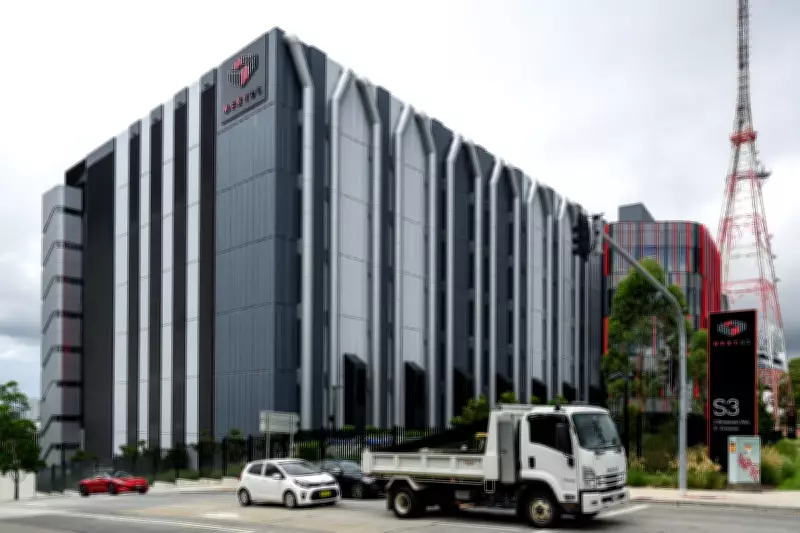
Australia currently hosts 260 operational data centers, with the majority concentrated in Sydney and Melbourne, and dozens more facilities in various stages of planning and development. These massive warehouses filled with servers process and store the digital data that powers our increasingly online lives, from AI chatbots and video generation to meeting transcriptions.
The AI-Driven Growth Spurt
While data centers have existed for decades, the industry is experiencing unprecedented expansion fueled by artificial intelligence adoption. Technology companies are actively promoting Australia as a hub for data processing and storage, but this rapid growth raises serious questions about resource consumption and environmental impact.
There's a growing expectation that if you build a data center, you must meet your own energy needs, but this addresses only part of the complex policy questions surrounding this infrastructure boom.

International and Domestic Policy Responses
In the United States, former President Donald Trump recently announced "ratepayer protection pledges" requiring technology companies to meet their own power requirements, stating that "they can build their own power plants as part of their factory, so that no one's prices will go up."
In Australia, Energy Minister Chris Bowen acknowledged that "data centers are big energy users" and indicated this issue would be addressed in a forthcoming AI and data center strategy. He emphasized that "people who are building data centers do need to build new energy to go with it, and that energy will be renewable."
A coalition of energy and environment groups, including the Clean Energy Council, Electrical Trades Union, Australian Conservation Foundation and Climate Energy Finance, has proposed "public interest principles for data centers" that include:
- Investing in new renewable energy infrastructure
- Implementing responsible water usage practices
- Ensuring resource sustainability
Australian Conservation Foundation chief executive Adam Bandt stated clearly: "If you want to build a data center, you should have to build the renewables and water recycling to power it. Big tech corporations should be forced to do their fair share so they don't drain our resources."
Electricity Supply Concerns
Data centers currently draw approximately 2% of electricity from Australia's national grid, but the Australian Energy Market Operator (AEMO) warns this share could triple within five years. By 2030, AEMO forecasts that data center energy demands could exceed the power used by the nation's entire fleet of electric vehicles.
Looking further ahead to 2035, the industry could consume 21.4 terawatt hours of power annually, an amount just shy of the yearly consumption of Australia's four aluminum smelters. AGL, one of Australia's largest electricity companies, anticipates demand might even "outstrip AEMO's forecasts."
This energy consumption is largely related to cooling requirements, as servers convert electrical energy into heat that must be managed through air conditioning or water-based cooling systems.
Globally, data center power demand is growing four times faster than all other sectors, according to the International Energy Agency. The IEA notes that "a hyperscale, AI-focused data center can have a capacity of 100MW or more, consuming as much electricity annually as 100,000 households."
Impact on Electricity Prices
Dr. Dylan McConnell, an energy systems researcher at the University of New South Wales, warns there will be "an undeniable impact on the overall cost of electricity, which will flow through to power prices." He explains that "you need to build a bigger system to serve this load, and that will mean more expensive resources are used."
A report by Baringa consultants for the Clean Energy Finance Corporation (CEFC) finds that by 2035, data center growth could increase wholesale electricity prices by 26% in New South Wales and 23% in Victoria, primarily driven by a need for more expensive gas peaking generation.
The report further warns that "this reliance not only drives up prices, but could also lead to a 14% increase in grid emissions across the national electricity market."

Julia Hinwood, the CEFC's head of infrastructure, suggests Australia can "avoid these pitfalls" by "investing early in renewable energy and storage capacity to power the sector."
Industry group Data Centres Australia reports that power purchase agreements and onsite solar account for about 70% of the industry's energy consumption. The group's CEO, Belinda Dennett, states that "the data center industry is one of the largest investors in renewable energy."
Climate Targets and Emissions Challenges
Despite renewable energy growth in Australia, Dr. McConnell warns the pace isn't yet fast enough to meet renewable energy and emissions targets. Data center expansion could complicate these efforts significantly.
"If we are in a situation where demand is growing much faster than anticipated and renewables don't keep up, then actually what we end up doing is just powering that new demand and not displacing coal," McConnell explains.
Australia's emissions projections indicate that additional demand on the grid from data centers contributes to a slowdown in emissions reductions from the power sector after 2035.
Water Supply Pressures
While Data Centres Australia describes the industry as "modest water users" and highlights opportunities to reduce drinking water reliance through closed-loop cooling systems and recycled water, water authorities anticipate significant demand.
Data center water demand in Sydney alone is forecast to reach 250 megalitres daily by 2035, roughly equivalent to Canberra's total drinking water consumption. Meanwhile, Melbourne Water reports that development applications for new hyperscale data centers already exceed the water demand for nearly all of the state's top 30 business customers combined.
As Australia positions itself as a data processing hub, balancing technological advancement with resource sustainability remains a critical challenge requiring coordinated policy responses and industry accountability.