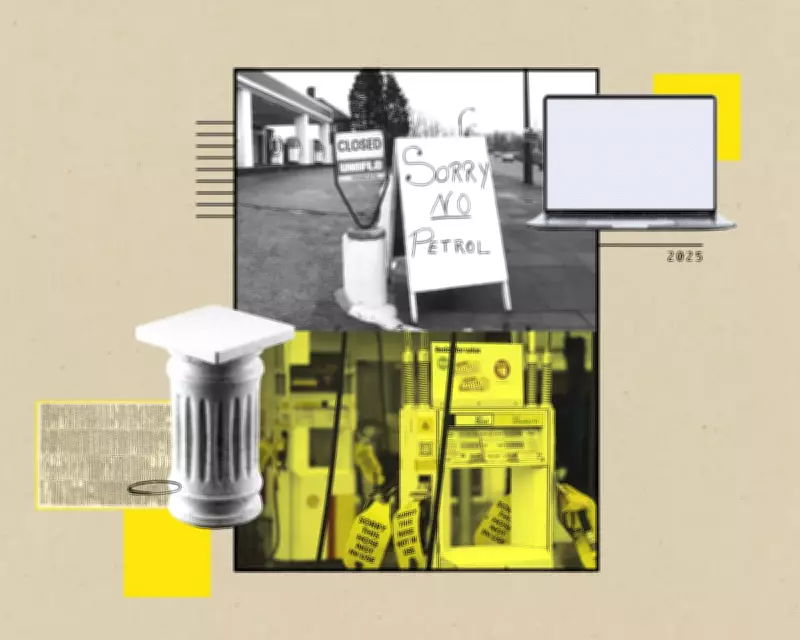
Australia's Energy Shield Has Shattered
Australia once weathered global fuel storms with remarkable resilience, but that protective barrier has now completely eroded. During the tumultuous 1970s oil shock, the nation maintained approximately 70% self-sufficiency in petroleum products, thanks largely to Bass Strait discoveries. This domestic production cushion softened what became a devastating economic blow for much of the Western world.
The 1970s Buffer That No Longer Exists
The 1973 Yom Kippur War triggered a global energy earthquake when Arab petroleum exporters reduced production and suspended deliveries to Israel-supporting nations. While Australia avoided direct embargo impacts, the shockwaves still transformed its economic landscape. The mining boom that began in 1960 paused for three years, and the golden age of low unemployment and inflation ended abruptly.
Australia experienced the same "stagflation" phenomenon as other Western countries—that painful combination of high unemployment and inflation occurring simultaneously. Fuel prices surged by 25%, inflation peaked near 18%, and unemployment doubled from early-1970s levels of about 2% to over 10% by the early 1980s.

Protective Measures That Worked
Several factors insulated Australia from the worst effects. The Fraser government's 1978 introduction of Import Parity Pricing functioned as an early carbon tax, generating Treasury revenue while conserving domestic oil supplies. Only after the 1979 Iranian Revolution caused another price spike did Australia implement limited petrol rationing.
Domestic refining capacity provided additional protection. Australia's refineries could process locally produced light crude into usable fuel, reducing dependence on imported refined products. This industrial capability created a crucial buffer against global market disruptions.
The Stark Reality of Current Dependence
Today's energy landscape presents dramatically different vulnerabilities. Where embargoed oil affected about 7% of global consumption in 1973, current conflicts threaten approximately 20% of worldwide oil supplies and 30% of Australia's refined oil. The Strait of Hormuz closure alone impacts 20 million barrels daily—one-fifth of global consumption and nearly a third of all seaborne oil trade.
Australia's domestic production has plummeted from 70% self-sufficiency to 90% dependence on imported liquid fuels. Six major refineries closed after 2003, unable to compete with Singaporean facilities, leaving only two operational. The nation abandoned plans for a sovereign oil and gas company after 1975, relinquishing control over natural resources that countries like Saudi Arabia and Norway maintain strategically.
Compounding Crisis Factors
The current emergency extends beyond petroleum. Liquefied natural gas faces severe disruptions, with Qatar declaring force majeure on approximately one-fifth of global LNG supply. The International Energy Agency predicts full Strait of Hormuz closure would remove over 300 million cubic meters daily from global gas markets—double the peak capacity of the sabotaged Nord Stream pipeline.
Additional critical materials face supply chain threats: nitrogen fertilizers for agriculture, aluminum, helium for medical imaging, and pharmaceutical precursors. This multidimensional crisis creates vulnerabilities across multiple economic sectors simultaneously.
Historical Parallels and Future Projections
Unless conflict resolution occurs rapidly, Australia may require stricter rationing measures than those implemented in 1979, potentially approaching Second World War-era levels of control. Managing the fallout from current disruptions will likely require coordinated Commonwealth and state intervention resembling COVID-19 crisis responses.
The fundamental shift from energy independence to near-total import dependence represents Australia's most significant strategic vulnerability. Without the buffer of domestic production and refining capacity that softened previous crises, the nation faces unprecedented exposure to global market volatility and geopolitical instability.