Australia's Fuel Crisis Intensifies Amid Iran Conflict, Prompting Calls for Swift Action
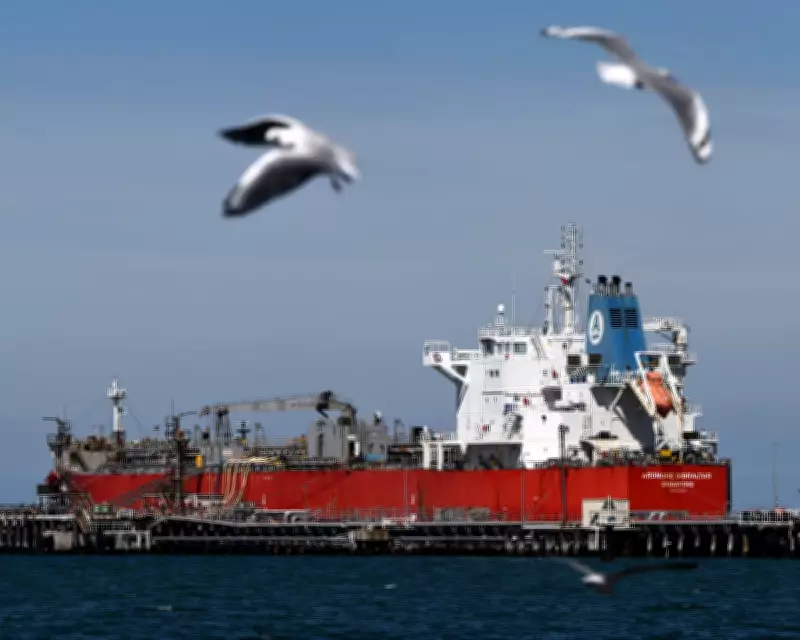
A crude oil tanker docked at the Geelong Oil Refinery in Corio, Geelong, symbolizes Australia's deepening fuel crisis as petrol and energy prices surge worldwide. The federal government is scrambling for solutions amid the war in Iran, highlighting the nation's vulnerability to global shocks.
Why Australia's Dependence on Foreign Oil Is a Critical Issue
Australia relies heavily on liquid fuels like petrol, diesel, and jet fuel for its economy, with only about 4% of fuel used domestically produced from Australian crude. According to Malcolm Roberts, chief executive of the Australian Institute for Petroleum, this makes the country completely dependent on imported fuel, primarily from Asia, which sources crude from the Middle East. Transport accounts for 70% of liquid fuel use, with road vehicles dominating, leaving Australia exposed to price shocks.
Assoc Prof Stuart Walsh, a resources engineer at Monash University, warns that even if the Strait of Hormuz reopens, this fuel shock is unlikely to be the last. He emphasizes the need for solutions to reduce reliance on foreign energy and boost domestic production. Prof Hussein Dia, a transport expert at Swinburne University, adds that moving away from oil is crucial for both stability and climate action.

Immediate Measures to Address the Crisis
Energy Minister Chris Bowen has announced measures to increase supply, including relaxing fuel standards and releasing 762 million litres from domestic reserves. However, petrol stations face unprecedented buying levels, surpassing those seen during the Russia-Ukraine war. In response, experts suggest short-term actions:
- Encouraging public transport use, such as taking advantage of discounted fares in Queensland and Victoria.
- Promoting carpooling and remote work to reduce fuel consumption.
- Accelerating the adoption of electric vehicles (EVs) and bikes, with even moderate EV penetration making a noticeable difference.
Helen Rowe, transport lead at Climateworks Centre, notes that the crisis might prompt people to change travel habits. The Greens propose free public transport as a response, estimating it could save households up to $500. However, Prof Jago Dodson of RMIT University cautions that boosting public transport in outer suburbs will be challenging in the short term.
Medium to Long-Term Solutions for Energy Independence
Looking ahead, better bus services could be implemented within six months to a few years, with studies showing potential for significant increases in usage and reductions in road traffic. Pop-up bike lanes and accelerated electrification of bus fleets, as seen in New South Wales targeting 2035, are also viable options. Transitioning to electric vehicles remains a key strategy, as electricity is produced locally and reduces import dependency.
For freight, shifting more goods to rail and incentivizing zero-emission trucks could cut emissions and congestion. In aviation, optimizing routes and exploring sustainable aviation fuels (SAF) are limited but necessary steps, though SAF costs and scale remain barriers. Qantas aims for 10% SAF use by 2030.
The Path Forward: Decades of Transformation Needed
Long-term solutions include a complete shift to an electric economy with batteries and hydrogen fuel cells, reducing reliance on volatile regions like the Middle East. Prof Dodson stresses the need for better public transport infrastructure to buffer cities against future shocks, criticizing past investments in motorways without considering optimal approaches. Walsh concludes that this crisis serves as a motivator to rethink energy supply chains, driven by environmental concerns, economic impact, and national security.