
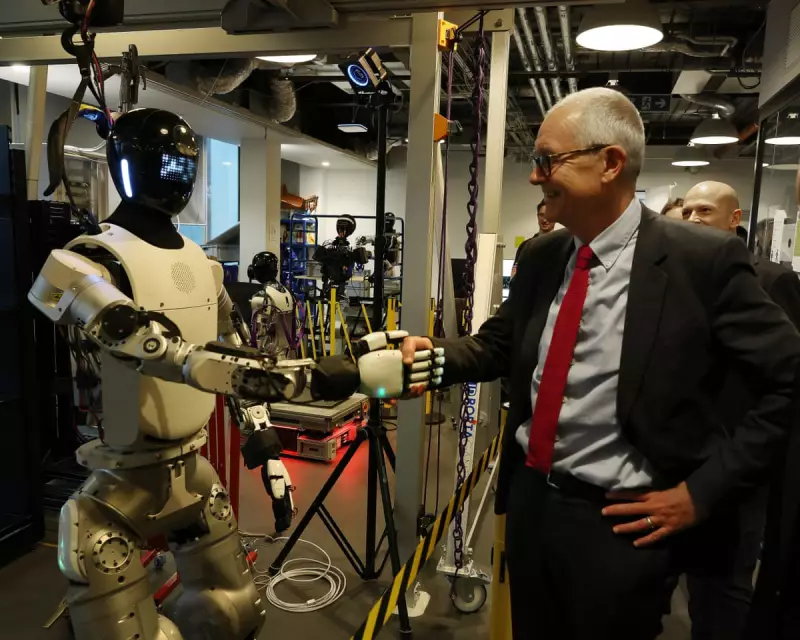
The UK's Science Minister, Patrick Vallance, has declared that the convergence of artificial intelligence and robotics is poised to fundamentally reshape the nature of human work, with factories and warehouses set to be the first sectors transformed.
Productivity Gains vs. Unemployment Fears
Lord Vallance argued that this technological shift will drive productivity by taking over repetitive tasks, thereby altering but enhancing human roles. He cited the example of robotic surgery, where technology assists rather than replaces surgeons, enabling greater precision.
However, his optimistic vision was starkly contrasted by a warning from the Mayor of London, Sadiq Khan. In his annual Mansion House speech, Khan cautioned that artificial intelligence risks ushering in a 'new era of mass unemployment' unless the government intervenes to manage the transition and replace lost jobs.
Government Backs Robotics with Funding and Deregulation
The ministerial comments coincided with significant government announcements aimed at accelerating the adoption of these technologies. The Regulatory Innovation Office (RIO) is expanding its remit to include both defence technology and the robotics sector, with a goal of slashing bureaucratic red tape for companies.
Simultaneously, the Department for Science, Innovation and Technology is releasing £52 million in funding to establish new hubs. These centres will drive robotics adoption in British businesses by offering expert advice and live demonstrations.
Vallance made his remarks during a visit to Humanoid, a UK-based robotics firm that has already deployed its prototype humanoid robots in a factory operated by the German industrial giant Siemens.
The First Wave of Change
"Activities that require movement around warehouses and factories... will be made robotic in many cases and therefore, will change the nature of those jobs. That's going to be the first wave," Vallance told The Guardian.
He emphasised that the combination of AI with advanced robotics, particularly humanoid forms, is creating a 'whole new area' for automation. While this will displace certain tasks, the minister believes it will allow human workers to focus on more complex and interesting elements of their roles.
The expanded RIO will aim to streamline complex regulatory approvals, such as those needed for autonomous drones which currently require separate clearances for aviation, data protection, and safety. This process can be expensive and take months to complete.




