
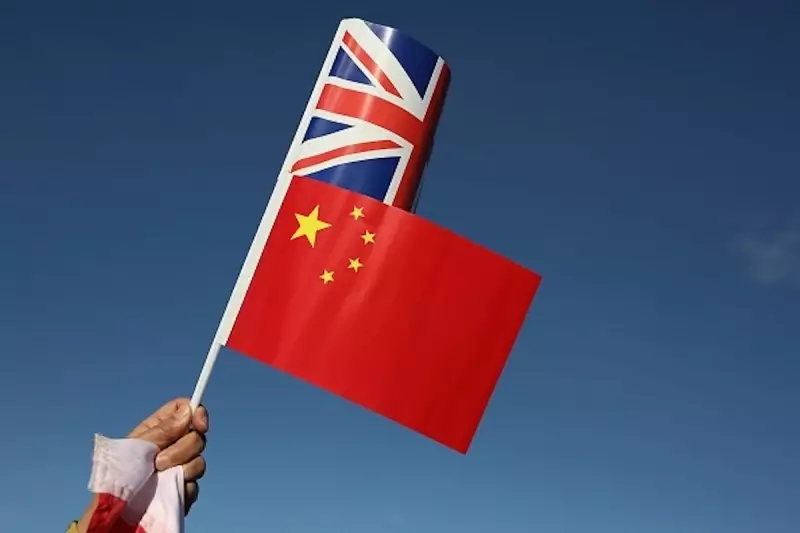
A stark warning has been issued to the UK government over the nation's economic vulnerability, with tens of thousands of jobs said to be in jeopardy due to an over-reliance on trade with China.
High-Growth Sectors Face Geopolitical Risk
Research from the Institute for Public Policy Research (IPPR), a think tank with links to senior Labour figures, indicates that approximately 90,000 jobs are exposed to the whims of geopolitical developments involving China. The analysis, published in January 2026, singles out the clean energy and automotive industries as being at greatest risk.
The report cautions that these jobs, along with the production of 580,000 electric vehicles crucial for meeting the government's net zero targets, could be threatened by disruptions to supply chains that pass through the world's second-largest economy. Sectors involving batteries and critical minerals are highlighted as particularly susceptible.
Potential Fallout for Prices and Living Standards
Analysts suggest that a serious breakdown in relations or trade could have severe consequences for energy prices and living standards across the UK. Pranesh Narayanan, a senior research fellow at the IPPR, pointed to former President Trump's trade war and potential diplomatic conflicts as factors that could endanger the UK economy.
"These shocks ultimately hurt the UK economy because we rely so much on trade to source the essentials, including clean energy technologies," Narayanan stated. He referenced Chancellor Rachel Reeves and her concept of 'securonomics', emphasising the need for greater economic resilience.
Government Stance and Business Skepticism
The IPPR report criticises the government for lacking a "clear position" on the terms of the UK's trading relationship with China and its approach to Chinese inward investment. It proposes solutions such as stockpiling, investment partnerships, and 'keepshoring'—maintaining domestic production capacity—to shield businesses from collateral damage in economic disputes.
This fresh research increases pressure on the Labour government to clarify its stance on China. This comes as Prime Minister Keir Starmer plans a visit to China later in January 2026, accompanied by business leaders, and following the expected approval of China's new "mega embassy" in London.
Foreign Secretary Yvette Cooper has also confirmed her intention to visit Beijing. However, a recent Deloitte survey reveals business leaders' scepticism; nearly half (46%) expect more trade barriers with China in the next five years, though 51% still favour closer ties.




