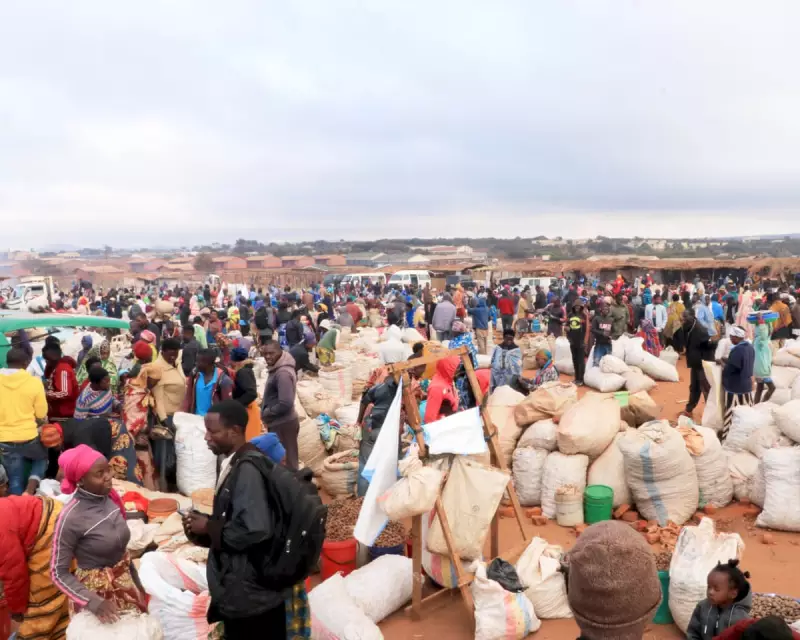
A stark new report from the World Bank has revealed that a quarter of all developing countries are now poorer than they were before the Covid-19 pandemic struck in 2019. The analysis points to a significant economic reversal, with many nations, particularly in sub-Saharan Africa, failing to recover from the global shock.
A Persistent Negative Shock for the Poorest
The Washington-based institution found that a large group of low-income countries endured a negative economic shock over the six years to the end of 2023. While the global economy has shown resilience, this progress has been uneven. Many of the affected nations are in sub-Saharan Africa, a region where conflicts and famines have further delayed recovery from the pandemic's impact.
Indermit Gill, the World Bank's Chief Economist, stated that these troubling trends are not merely due to bad luck. "In far too many developing countries, they reflect avoidable policy mistakes," he argued. The report notes that even recent increases in growth for some countries have been too weak to compensate for earlier severe slumps.
Global Growth 'Downshifted' and Insufficient
The bank's assessment is that worldwide economic growth has "downshifted" since the pandemic. This slower pace is now "insufficient to reduce extreme poverty and create jobs where they're needed most". Growth in emerging market and developing economies is expected to decelerate from 4.2% in 2024 to 4% in 2025.
While global growth is proving more durable than expected—boosted by an upgraded forecast for the robust US economy—the outlook remains modest. The euro area is highlighted as a laggard, with growth projections of just 0.9% in 2025 and 1.2% in 2026. Overall, global growth is projected to hover around 2.6-2.7% for the next three years.
A Call for Policy Reform and Investment
Gill issued a clear prescription for governments seeking to reignite their economies. He emphasised the need to "aggressively liberalise private investment and trade, rein in public consumption, and invest in new technologies and education". Adhering to strict budget rules, he said, provides the essential foundation for sustainable growth.
The report warns of a growing challenge: the global economy is becoming less dynamic even as it appears more resilient to policy uncertainty. "With each passing year, the global economy has become less capable of generating growth," Gill noted. This situation is unsustainable, especially with 1.2 billion young people under 16 expected to enter the job market in the coming decade.
The World Bank concludes that the world economy is set to grow slower than it did in the 1990s, all while carrying record levels of both public and private debt, creating a precarious backdrop for future development.