Trump's Tariff Policy Faces Scrutiny One Year After 'Liberation Day'
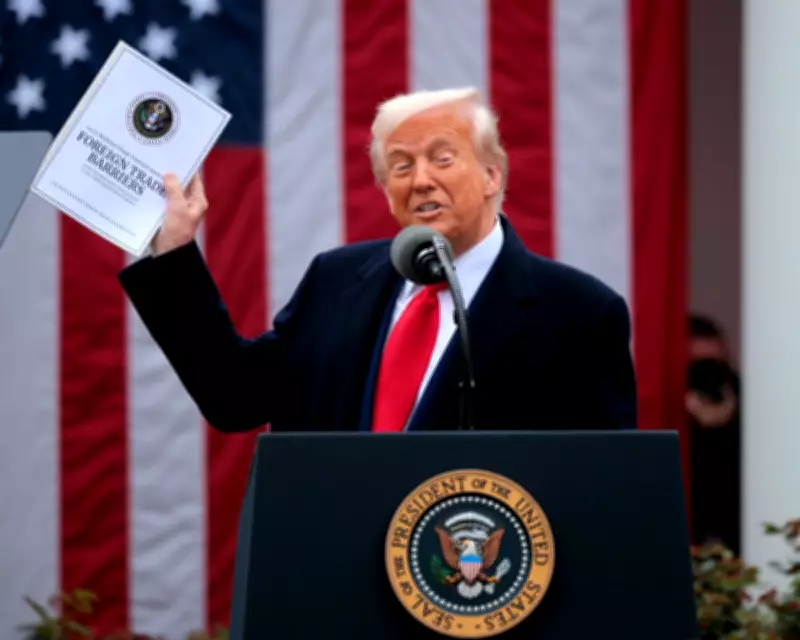
On April 2, 2025, Donald Trump declared "liberation day" at a 'Make America Wealthy Again' event in the White House Rose Garden, unleashing a sweeping wave of import tariffs that shocked global markets. Now, one year later, analysts and economists are delivering a harsh verdict: the policy has largely failed, even by the Trump administration's own standards.
Chaos and Economic Decline
Before the tariff announcement, Trump had already spent months disrupting Washington with initiatives like the Department of Government Efficiency (Doge), which slashed government jobs and defunded aid agencies. This chaos, experts say, was a deliberate tool in Trump's arsenal, leading to a steady decline in the dollar's value as investors fled U.S. assets for markets in Europe, Asia, and South America.
Dario Perkins, head of global research at TS Lombard, remarked, "If you think discouraging investors from buying U.S. assets is a victory, you don't believe in a growing economy. If Trump had spent the last 14 months on the golf course, we'd be in a better place."
Failed Promises and Job Losses
Trump's executive order claimed that tariffs would combat the decline of U.S. manufacturing and protect jobs. However, data tells a different story. According to the Bureau of Labor Statistics, U.S. companies halted hiring almost immediately after liberation day, with significant revisions in February 2025 showing a net addition of only 181,000 jobs for the year—a minuscule figure against the backdrop of 163 million employed Americans.
Worse, the manufacturing sector shed 100,000 jobs between January 2025 and March 2026, with the ratio of manufacturing workers to total nonfarm employment hitting its lowest point since 1939. The Bureau of Economic Analysis also reported that the U.S. goods deficit expanded to an all-time high in 2025, undermining the administration's goal of boosting exports.
Eroding Consumer Confidence
Consumer confidence, as measured by the Conference Board, slid after Trump took office. A brief recovery coincided with a May 12, 2025, agreement between the U.S. and China to defuse tariff escalations, but sentiment plummeted again in the autumn amid budget battles and government shutdowns. By the end of 2025, a University of Michigan poll showed consumer confidence at near-record lows, with all generations losing faith in the economy.
Russ Mould, investment director at AJ Bell, noted, "America remains the world's largest economy, but investors are reassessing their exposure. Tariffs, challenges to the Federal Reserve's independence, and military actions are prompting a rethink of American exceptionalism."
Global Shifts and Criticisms
Free market conservatives have been vocal in their criticism. Bryan Riley, director of the National Taxpayers Union Foundation's free trade initiative, stated, "One year after liberation day, the evidence is in. Tariffs failed to shrink the trade deficit, revitalize manufacturing, or help farmers. Replacing them with more tariffs would be a mistake."
Meanwhile, global dynamics are shifting. Some U.S. companies have redirected investments to Europe, but China has emerged as a key beneficiary, with industrial profits surging 15.2% in the year to February 2026. Critics argue that Trump's populist agenda, likened to Vladimir Putin's tactics, is hollowing out the U.S. economy to fund pet projects, potentially leading to long-term decline.
As investors seek safer havens, the legacy of liberation day tariffs serves as a stark reminder of the policy's unintended consequences, raising questions about America's economic future on the global stage.