Trump's Tariff Turmoil: One Year After 'Liberation Day'
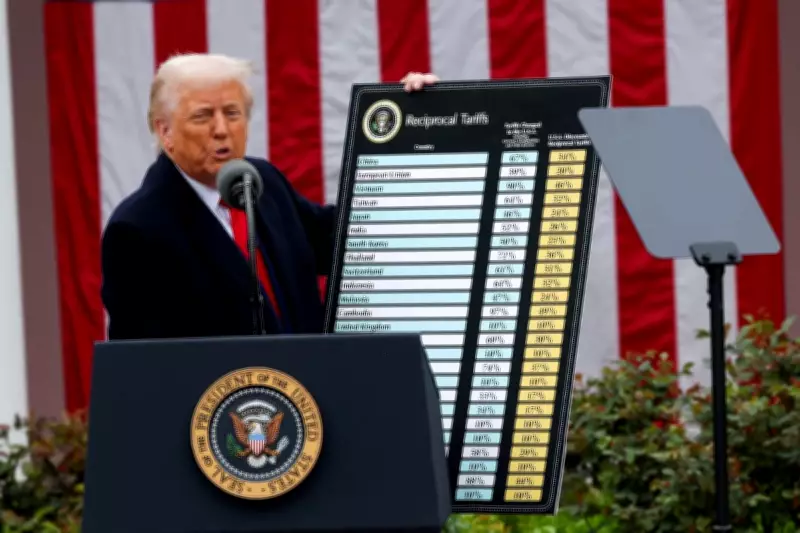
On the first anniversary of what Donald Trump dubbed 'Liberation Day', the global economic landscape remains mired in complexity and uncertainty. Launched with great fanfare on the White House lawn, Trump's tariff initiative was heralded as a bold experiment, but twelve months later, it has evolved into a labyrinthine challenge for international trade.
The Initial Shock and Partial Retreat
The Trump tariff regime began with a dramatic proposal to increase the overall net tariff rate from 2.5 percent to 27 percent, a more than ten-fold rise that sent shockwaves through financial markets. This prompted a bond market revolt, forcing the US Administration to pause the new structure for 90 days to allow for negotiations on fresh trade treaties. However, China faced an even steeper threat, with the United States initially proposing a 145 percent tariff before a series of truces were reached.
Frantic Negotiations and Legal Hurdles
Frantic discussions led to interim deals, starting with the United Kingdom, creating an uneasy peace where nations preferred to bargain down tariffs rather than risk a full-scale trade war. The calm was briefly disrupted earlier this year when Trump threatened eight European nations with a 25 percent tariff over Greenland, but this storm abated quickly. More significantly, the Supreme Court ruled on February 20 that the principal mechanism for increasing tariffs was unconstitutional, throwing a major spanner into the works.
New Mechanisms and Ongoing Uncertainty
In response, Trump turned to Section 122 of the Trade Act 1974, imposing an across-the-board 10 percent tariff set to last 150 days until July 24, unless reauthorized by Congress—a highly unlikely scenario. Looking ahead, other provisions like Sections 301 and 302 of the Trade Act 1974 and Section 232 of the Trade Expansion Act 1962 may come into play, further complicating matters for companies uncertain about their 2027 tariff rates.
Opportunities Amidst the Chaos
While it might be tempting for private markets to retreat in the face of such turmoil, this would be a mistake. Complication creates opportunities as well as challenges, particularly for those in private equity or private credit based in the UK. Economic policy is in a Rubik's Cube era, but the fundamentals show that the tariff turmoil has not sent global GDP into a tailspin, with more risk posed by conflicts like the Iran War.
The effective overall tariff rate today stands at about 13.7 percent, significantly higher than in April 2024 but half of last April's peak. Financial services remain largely unaffected, and the UK's relative position in terms of tariffs is strong. Moreover, the influx of American money into UK venture capital highlights the country's appeal as an attractive investment option. Deal flow in the UK private equity industry is rebounding, suggesting that pessimism is overpriced at present. Private markets must press on, not be torpedoed by tariffs.
Dr Tim Hames is a senior adviser to Treble Peak.