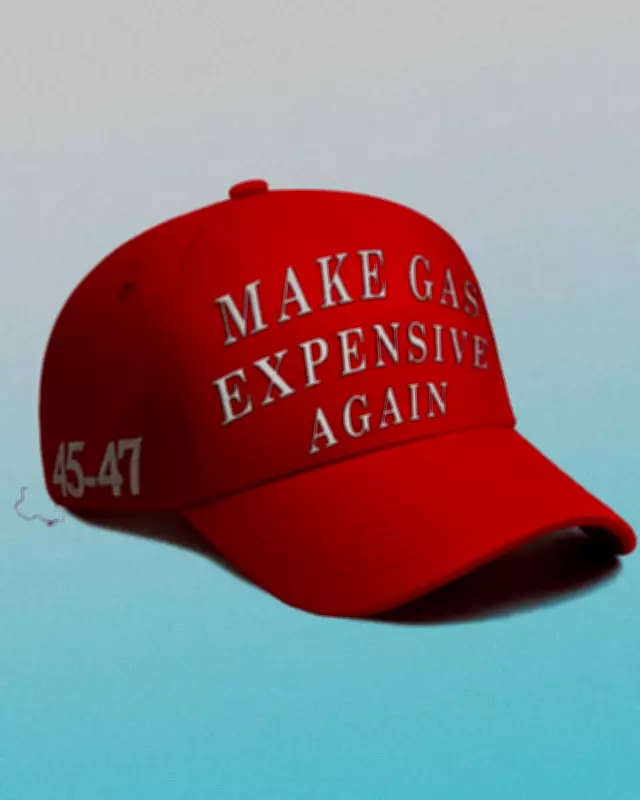
Trump's Iran Comments Create Economic 'Fog of War' as Global Markets Brace
Economists are warning that Donald Trump's comments about the Iran conflict have induced what they describe as a dangerous "fog of war" that threatens to destabilize the global economy. As the conflict enters its third week, initial market optimism about a quick resolution has evaporated, replaced by growing concerns about prolonged economic disruption.
From Temporary Disruption to Mounting Crisis
In the immediate aftermath of U.S. and Israeli airstrikes on Iran, including the attack that killed Supreme Leader Ayatollah Ali Khamenei, financial markets largely dismissed the economic fallout as temporary. "History has shown time and time again that geopolitical flare-ups like this tend to be short-lived," one U.S.-based fund manager commented at the time. Major financial institutions including Goldman Sachs and UniCredit initially predicted limited disruption, with crude oil prices expected to remain capped around $80 per barrel.
Three weeks later, the economic landscape has dramatically shifted. Oil prices have surged above $100 per barrel, European gas prices have doubled, and volatility has returned to financial markets with a vengeance. Consumers worldwide are bracing for another surge in living costs, while central banks including the Federal Reserve, Bank of England, and European Central Bank warn the conflict could materially impact inflation and dent global growth.
The Stakes Are Enormous for Global Economy
Albert Edwards, a senior analyst at Société Générale, notes that "market wisdom still holds that the war will end quickly, with the Strait of Hormuz soon to reopen. Maybe the market is right, but in my opinion the risks are asymmetric that stagflation bursts the complacency bubble."
The economic consequences are spreading across multiple sectors:
- Energy Markets: Iran has threatened to send oil prices to $200 per barrel through targeted attacks on shipping through the Strait of Hormuz, as well as refineries and pipelines across the Middle East. The recent missile strike on Qatar's Ras Laffan liquefied natural gas facility has analysts warning of potential "doomsday" scenarios.
- Agriculture and Food: Fertilizer costs are rising sharply worldwide, threatening crop yields and setting the stage for significant food price increases. The Gulf region produces about half of global urea exports and critical fertilizer ingredients.
- Manufacturing and Industry: European heavy industry, still recovering from the 2022 energy price shock following Russia's invasion of Ukraine, faces renewed pressure. Chemical giants like Germany's BASF are raising prices, while supply chain disruptions threaten everything from plastics to pharmaceuticals.
Historical Parallels and Modern Vulnerabilities
Ian Stewart, chief economist at Deloitte UK, draws concerning historical parallels: "Higher energy prices, triggered by war or revolution in the Middle East, were important factors in western recessions in 1973, 1979 and 1990. The surge in energy prices in the wake of Russia's invasion of Ukraine collapsed Europe's growth rate in 2023."
The most direct comparison comes from the 1980s "tanker war" during the Iran-Iraq conflict, when Ronald Reagan dispatched the largest naval convoy since World War II to protect shipping through the Strait of Hormuz. Today, similar naval escorts are being discussed after what appears to be a miscalculation by the Trump administration that this conflict would unfold differently.
Mixed Messages from Washington Add Uncertainty
Washington's messaging has been contradictory, adding to market uncertainty. Trump has declared the war "won" while simultaneously suggesting it could end "soon" or might need to go "further." Barclays analysts compare this communication to a 19th-century-style "fog of war," noting that "a dense fog has been induced by the communication about the war: its objectives, its duration, its potential expansion and/or its off-ramps."
This uncertainty fuels violent market swings and complicates business planning worldwide. Forecasters warn that a prolonged conflict could resemble past global economic crises, with Barclays estimating that oil prices averaging $100 in 2026 would reduce global growth by 0.2 percentage points while increasing headline inflation by 0.7 percentage points.
Structural Vulnerabilities in Global Economy
The world economy faces this crisis with particular vulnerabilities. While energy intensity has fallen by about 70% since the mid-1970s, the global economy has become more interconnected through globalization and just-in-time supply chains. Global trade in goods and services has swelled from 42% of world GDP in 1980 to more than 60% by the mid-2000s.
This interconnectedness creates new risks. Supply chain disruptions could affect everything from semiconductor production (dependent on helium from Qatar) to pharmaceutical manufacturing. The conflict has accelerated trends toward "nearshoring" and "friendshoring" as companies seek to build more resilient supply chains aligned with politically friendly nations.
Potential Long-Term Consequences
Even if the conflict ends relatively soon, economists warn of lasting consequences. The fragmentation of the global economy could add permanent additional costs, potentially stoking inflation in the short term while weighing on growth in the long term. Wei Yao, an economist at Société Générale, suggests the conflict has put the world's central banks "at the mercy of war," adding: "There are moments when one must come near the edge to remember why one must not go over it. We may be at one of those moments."
While some factors provide limited comfort—including U.S. energy independence, China's oil stockpiles, and Europe's diversification efforts since 2022—the overall picture remains concerning. As Warren Patterson of ING notes, "The key difference is that current supply disruptions are temporary. Yes, there is plenty of uncertainty about the duration of the disruption, but ultimately, supply will return." However, the economic and geopolitical landscape may be permanently altered by this conflict and the uncertainty surrounding it.