RBA Governor's Stark Warning on Recession Risks to Combat Inflation
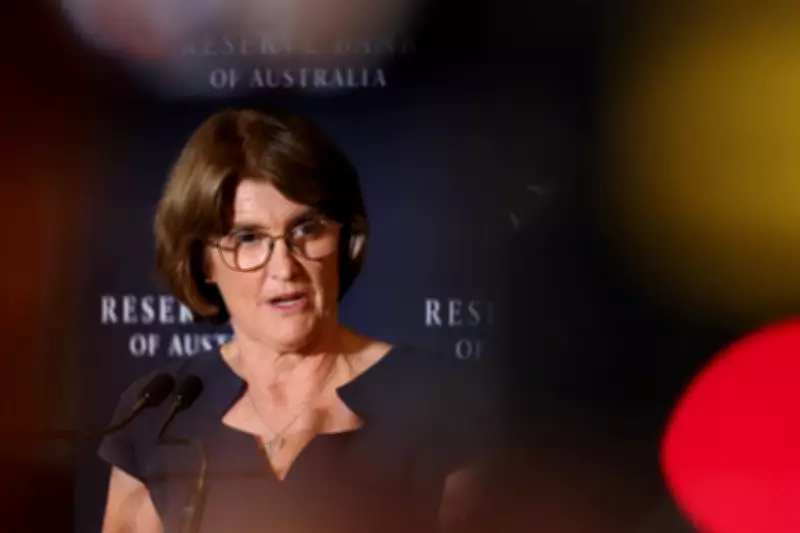
The governor of the Reserve Bank of Australia, Michele Bullock, has recently faced intense scrutiny after being questioned about her willingness to push Australia into a recession if necessary to bring inflation under control. Her response, described as "not altogether comforting" by economist Greg Jericho, has ignited widespread debate about the central bank's aggressive monetary policy stance and its potential consequences for the nation's economic stability.
Economic Uncertainty and the Shadow of Stagflation
Concerns about a possible recession in Australia have been mounting in recent weeks, driven by fears of stagflation—a phenomenon from the 1970s and 1980s where inflation rises alongside economic stagnation and increasing unemployment. Historically, such periods were triggered by events like the OPEC oil crisis and the Iranian revolution, which disrupted global oil markets and led to severe economic downturns.
Recent geopolitical tensions, particularly involving Iran, have revived these anxieties, causing jitters in financial markets. However, a temporary de-escalation by former US President Donald Trump has provided some relief, with oil prices dropping sharply by 13% in a single hour. Despite this brief reprieve, the underlying economic vulnerabilities remain, as inflation continues to outpace expectations, partly due to companies raising prices in response to global shocks, similar to trends observed after Russia's invasion of Ukraine.
Historical Precedents and the RBA's Aggressive Stance
Past recessions in Australia have often followed aggressive interest rate hikes by the Reserve Bank. For instance, in the early 1980s, official interest rates soared from 9.8% to 15.4% over nine months, culminating in a recession and eventually peaking at a record 20.8% in August 1982. Similarly, the 1990s recession was preceded by rate rises that reached 18.2% in November 1989.
Governor Bullock's recent remarks underscore the RBA's current hardline approach. When asked if she would be prepared to induce a recession to tame inflation, she stated, "We don't want to have a recession, but if it's hard to get inflation down, then you know we're going to have to deal with that possibly." This stance has alarmed many, as it suggests a willingness to prioritize inflation control over economic growth, even at the cost of widespread job losses and financial hardship.
Market Expectations and the Path Forward
Financial markets are anticipating further interest rate increases by the RBA, with predictions of a rise in May and another by December, despite Trump's recent diplomatic maneuvers. This reflects ongoing concerns about persistent inflation and the central bank's commitment to its target of keeping inflation below 3%. However, critics warn that the RBA's tendency to recognize policy mistakes only after they have occurred could lead to over-tightening, exacerbating economic slowdowns.
On a positive note, current economic indicators do not yet signal an imminent recession. Using the Sahm Rule—a measure developed by US economist Claudia Sahm that identifies recessions when unemployment rises by more than 0.5 percentage points within a year—Australia's labor market remains relatively stable. This contrasts with the arbitrary nature of the COVID-19 recession, which was driven by lockdowns rather than fundamental economic weaknesses, and saw a rapid recovery once restrictions eased.
The Human Cost of Recessions and Policy Implications
Recessions have profound and lasting impacts on society, particularly in terms of employment. Historical data shows that male full-time employment in Australia has never fully recovered from past recessions, with declines persisting for decades. This underscores the severe human cost of economic downturns, which can destroy livelihoods and erode social stability.
Governor Bullock's seemingly casual attitude toward potentially causing a recession has drawn criticism for overlooking these real-world consequences. While the RBA may believe it can manage a "small" recession through careful policy adjustments, the risks of triggering a deeper, more prolonged downturn are significant. As inflation remains a pressing issue, the central bank faces a delicate balancing act between curbing price rises and safeguarding economic growth.
In conclusion, while temporary geopolitical calm has alleviated some immediate recession fears, the RBA's unwavering focus on inflation reduction continues to pose risks. The hope among economists and citizens is that the bank will exercise caution, avoiding drastic measures that could lead to unnecessary economic pain. The coming months will be critical in determining whether Australia can navigate these challenges without falling into a recession that could have lasting detrimental effects.