RBA Governor Bullock Signals Potential March Rate Hike as Inflation Risks Mount
Reserve Bank of Australia Governor Michele Bullock has issued a stark warning that a March interest rate increase remains a "live" possibility, as the central bank grapples with escalating inflation pressures driven by Middle East conflict and domestic economic tightness.
Unusually Forthright Comments Shift Market Expectations
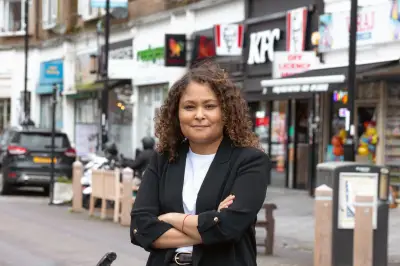
Speaking at the Australian Financial Review's business summit, Bullock delivered unusually direct remarks that immediately reshaped financial market expectations. While emphasizing she was "not making a prediction about March," the governor stated unequivocally that "it will be a live meeting" when the RBA board convenes on March 16-17.
This represents a significant shift from prevailing market sentiment, which had largely discounted any March movement in favor of a potential May hike following the next quarterly inflation report.
Dual Threats: Geopolitical Oil Shocks and Domestic Labour Squeeze
Bullock identified two primary factors driving the RBA's heightened alertness. First, the "prolonged" oil price spike resulting from attacks on Iran has created what she termed a "very elevated and lengthy rise" in energy prices that threatens both inflation control and economic growth.
"This one might be a little bit harder," Bullock cautioned, "because we already have elevated inflation, and I think there is a risk that inflation expectations might become a little bit unanchored."
Second, the Australian labour market remains exceptionally tight, with unemployment at 4.1% and inflation running at 3.8% headline rate. "The board will be actively looking at whether or not it needs to move more quickly," Bullock stated, adding pointedly: "I would discourage people from thinking that we necessarily only meet every quarter."
Market Reaction and Economic Implications
Financial markets responded immediately to Bullock's comments, with Bloomberg reporting that pricing for a March 17 hike jumped from near zero to above 25%. However, markets continue to view the May meeting as the most probable timing for the next rate move.
The RBA last raised its cash rate to 3.85% in February, responding to unexpected inflationary pressures through late 2023. Bullock acknowledged the central bank's delicate balancing act, stating: "The board's strategy has been to try and bring inflation down to target in a reasonable time frame while preserving the gains in employment. But it does beg the question of how patient can we be."
Global Context and Energy Price Dynamics
With a crucial Middle Eastern shipping route essentially closed since US-Israeli missile strikes over the weekend, Bullock warned that energy price shocks could reverberate through the global economy. While the response has been "orderly" thus far, she noted the RBA has been monitoring potential energy impacts since last year.
More expensive fuel presents a complex economic picture: it adds directly to headline inflation, potentially boosts government revenue through energy exports, but simultaneously drags on growth as households face higher power and petrol costs. "At the same time as there's potentially an inflationary impact," Bullock explained, "there's also potentially, if it's a very elongated conflict, the potential for it to be impacting economic activity, not just here, but around the world."
As Brent crude oil traded around $US78.07 per barrel and Wall Street stocks showed limited movement, Bullock's comments underscore the RBA's heightened vigilance in an increasingly volatile global economic environment.