Oil Price Surge Threatens Global Economy Amid US-Israel-Iran Conflict
Economists are issuing stark warnings that a prolonged conflict in the Middle East could have severe consequences for living standards across the globe. With oil prices soaring past $100 per barrel due to tensions between the US, Israel, and Iran, fears are mounting over a renewed inflation shock that could destabilize the world economy.
How High Could Oil Prices Climb?
Oil prices reached $119 per barrel on Monday, marking the highest level since Russia's full-scale invasion of Ukraine in February 2022. Analysts suggest that if the Strait of Hormuz remains closed, prices could approach $150 per barrel, surpassing the record high of $145.29 set in July 2008.
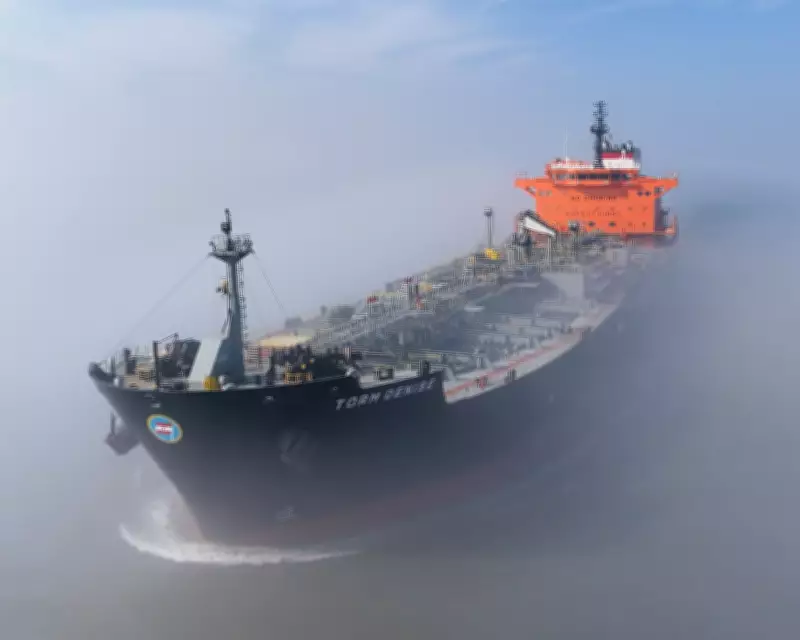
The Strait of Hormuz is a critical shipping route that carries one-fifth of global seaborne crude oil and liquefied natural gas, along with one-third of the most widely used fertilizer. Goldman Sachs has indicated that Iran's effective blockade of this waterway has had an impact 17 times larger than the peak disruption to Russian oil production in April 2022 following the Ukraine invasion.
The future trajectory of oil prices depends heavily on how long the strait remains closed and the ability to divert exports. While Saudi Arabia has begun routing crude to its Red Sea ports, most exporters face significant bottlenecks. Gulf oil and gas storage facilities are nearing capacity, potentially forcing large oilfields to shut down. Restoring production to previous levels would take considerable time, exacerbating the energy crisis.
Analysts note that a short, sharp conflict allowing Hormuz exports to resume could help cool energy prices. However, prolonged uncertainty over the safety of the waterway could persist. Capital Economics has warned that a longer-lasting conflict might keep oil prices above $100 per barrel throughout this year.
Inflation Risks and Economic Fallout
The surge in oil prices comes at a delicate moment for the global economy. Central banks had been nearing the end of an aggressive interest rate tightening cycle in response to Russia's invasion of Ukraine, with further rate cuts anticipated. However, the conflict with Iran could prompt a renewed rise in borrowing costs.
Higher energy costs and logistical bottlenecks are already affecting consumer prices. Fuel prices for motorists are rising, household energy bills could increase sharply, and businesses are facing higher costs that will ripple through global supply chains. These expenses will ultimately be passed on to consumers.
There is hope that a repeat of the 1970s inflation spikes, triggered by oil price shocks from the Middle East, can be avoided. Analysts point out that long-term inflation expectations have remained relatively stable in recent years, even after Russia's invasion of Ukraine, suggesting that central banks have helped maintain confidence in price control.
"The global economy is less sensitive to energy shocks than half a century ago," said Jim Reid of Deutsche Bank. "Economies are much less energy-intensive today, and labour markets have far lower unionisation and wage indexation, reducing the risk of a 1970s-style wage-price spiral."
Recession Fears and Government Responses
The inflation increases triggered by the Covid pandemic and Russia's invasion of Ukraine have already strained households and businesses. A renewed inflationary burst could damage consumer demand and hit economic activity, raising fears of stagflation—where growth stagnates while inflation increases.
"Talk of recession is back," said Ian Stewart, chief economist at Deloitte UK. "Surging oil and gas prices are harbingers of economic trouble. Higher energy prices, triggered by war or revolution in the Middle East, were major factors in western recessions in 1973, 1979 and 1990."
Higher borrowing costs and heightened geopolitical uncertainty are likely to impact business investment and global trade, potentially pushing fragile economies closer to recession.
G7 countries have stated they are ready to release emergency oil reserves to address global supply concerns. The US, having increased domestic production, is largely energy-independent despite depleting its strategic oil reserve. China has amassed vast oil stockpiles. European countries, as net energy importers, are likely to be hit hardest by the fallout.
Governments face renewed pressure to enhance energy security, with a focus on accelerating the transition to a low-carbon economy and investing in renewable energy. However, political battles over the pace of this transition are expected, similar to those seen after Russia's invasion of Ukraine.
Politicians are also being called upon to provide emergency financial support to help households and businesses cope with higher energy bills. EU countries and the UK implemented costly schemes four years ago, but many western governments now have stretched borrowing and debt levels, limiting their capacity to launch new programs without testing global bond market appetite.
"This may be a war, but it's also perhaps the biggest energy supply/logistics crisis we've ever seen in modern history," said Jordan Rochester of Mizuho Bank.