Economic Shockwaves from Middle East Conflict Hit UK Households
The tentative and incomplete peace currently holding across most of the Middle East offers little respite for households in the United Kingdom. While hostilities between Iran, Israel, and the United States have temporarily paused for negotiations, the profound economic consequences of the recent conflict are now being felt acutely in British homes. The specter of inflation has returned with a vengeance, primarily driven by a global surge in energy prices that began with the outbreak of fighting six weeks ago.
A Drastic Economic Reversal in Just Six Weeks
Only a month and a half ago, a cautious optimism surrounded the UK's economic prospects after years of disappointment. Financial markets anticipated interest rate cuts from the Bank of England, which would have lowered mortgage costs and spurred business investment. Energy prices had receded from the spikes following Russia's invasion of Ukraine, and economists pondered whether growth might finally exceed modest expectations.
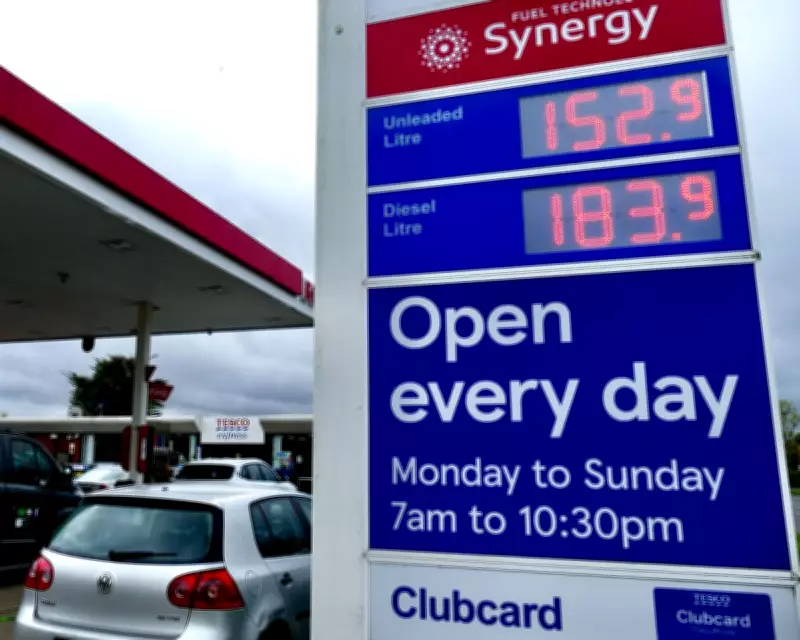
This fragile outlook shattered when the US and Israel launched attacks against Iran. The subsequent closure of the Strait of Hormuz by Tehran, which severed 20% of the world's oil supply, triggered an immediate surge in oil prices. The cost at petrol pumps jumped almost overnight, and these increased costs are now filtering through the entire UK economy. Growth forecasts have been downgraded, and markets now expect a slight rise in interest rates instead of the anticipated cuts, a phenomenon partly attributed to "Trumpflation."
Mounting Pressure on Household Finances
The economic fallout is translating directly into financial hardship for many. The price of petrol has skyrocketed, placing immediate strain on motorists and logistics. Simultaneously, mortgage costs have risen dramatically, with some house purchases collapsing as banks withdraw lending deals. The ripple effects extend to everyday essentials.
"Consider a supermarket distributing food nationwide," explains Richard Partington, the Guardian's senior economics correspondent. "It operates a fleet of lorries requiring diesel. To recover these soaring fuel costs, it has little choice but to increase prices on the shelves." This mechanism ensures that the pain of higher energy costs is transferred directly to consumers.
This deepening cost-of-living crisis, which began in 2022, is hitting the poorest households hardest. Official data indicates four in ten adults now struggle to pay energy bills. The situation is even more dire for the estimated 3.8 million people in the UK experiencing destitution, where households cannot afford basic necessities like staying warm, clean, clothed, and fed.
Government Finances Under Strain from Soaring Debt Costs
The conflict has also exacerbated pressure on the UK government's finances. National debt is nearing 100% of GDP, having accumulated through successive crises like the pandemic. This debt is becoming more expensive to service. Approximately one pound in every hundred of government spending is now allocated to debt interest, a significantly higher proportion than historically seen. This translates to roughly £100 billion annually spent solely on interest payments—an amount nearly equivalent to 90% of the entire Department for Education budget.
With government expenditure continuing to outstrip tax revenue, requiring further borrowing on financial markets, these borrowing costs have also increased since the war began, tightening the fiscal vise.
Limited Support and a Search for Stability
Chancellor Rachel Reeves has hinted at providing limited, targeted support to vulnerable groups in the autumn but has firmly ruled out a large-scale universal program akin to the one implemented under Liz Truss, which many economists blame for fueling inflation. The challenge lies in defining the cutoff for assistance effectively.
Despite the ceasefire, economic optimism remains scarce. Oil prices climbed again recently as markets questioned the durability of the peace deal. Oil tanker transit through the Strait of Hormuz has slowed further due to a new Iranian safe-passage tax. A breakdown in the agreement would deliver more bad news for the UK economy.
However, this crisis also presents a stark reminder and an opportunity. The UK's heavy reliance on fossil fuels, particularly from the volatile Middle East, highlights a critical fragility. Reducing this dependence to achieve greater energy security and stability is now seen as increasingly urgent, though it will be a costly and lengthy transition.
The human cost of the Middle East conflict has been immense, and its economic aftershocks are now reverberating through UK households, reshaping budgets, government spending, and the national conversation on energy security for the foreseeable future.