US Economy Faces Sustained Inflation as Iran Conflict Escalates
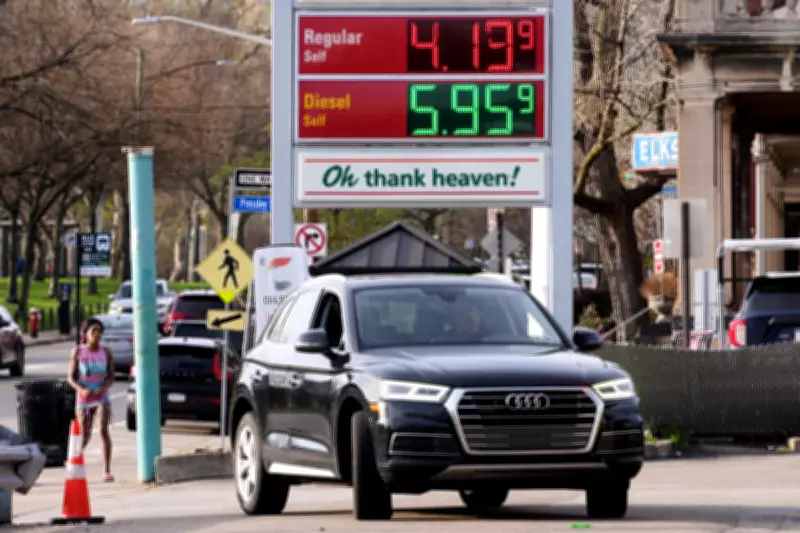
As gas prices climb at stations like a Sunoco in Pittsburgh, Pennsylvania, and air travel costs increase, economic analysts caution that these are merely the initial symptoms of a broader price surge triggered by the ongoing war in Iran. The conflict, which began in late February, has driven crude oil prices above $110 per barrel, with far-reaching implications for American consumers and businesses.
Oil Market Volatility and Global Supply Chain Disruptions
Christopher Tang, a professor at the UCLA Anderson School of Management specializing in global supply chain management, starkly notes, "The good old days are gone. Right now we see the gasoline prices going up, but that is only part of the story. Everything will be more expensive." This sentiment is echoed by experts who point to Iran's control over the Strait of Hormuz, a critical maritime chokepoint where approximately 20% of the world's oil transits. Iran's actions, including blocking shipments or imposing tolls of up to $2 million, force tankers to take longer routes or incur higher costs, directly inflating logistics expenses.
Despite former President Donald Trump's assertions in a recent address that "America has plenty of gas" and is independent from Middle Eastern oil, Samantha Gross, director of the energy and security initiative at the Brookings Institute, clarifies that oil is a globally traded commodity. "We're going to pay the same high prices that the global market is paying," she explains, highlighting that the US, while a top producer, still relies on imports and is vulnerable to international market fluctuations.
Ripple Effects Across Industries and Consumer Goods
The impact extends beyond fuel. Major corporations are already adjusting to the heightened costs. Amazon has announced a 3.5% surcharge for third-party sellers, while shipping giants UPS and FedEx have implemented fuel surcharges exceeding 25%. The US Postal Service is adding an 8% surcharge, noting in a press release that it is "less than one-third of what our competitors charge for fuel alone."
David Bieri, an economist at Virginia Tech's School of Public and International Affairs, warns that strategic oil reserves, which have been tapped in recent weeks, will need replenishment with high-priced oil, further driving up prices. "What we're seeing now is as these inventories have been depleted, they will need to be filled up again with actually high-priced oil," he states, suggesting that the current price hikes are just the beginning.
Oil is integral to chemical production for pharmaceuticals and fertilizers, affecting prescription drug and grocery costs. Christopher Wolf, a professor of agricultural economics at Cornell University, explains that rising diesel prices, used in farming, increase expenses for growing crops and raising livestock. "A lot of the retailers and processors have a rational expectations approach, which is, if we can see it coming, we'll start adjusting prices up so that it isn't a big shock all at once," he adds. The Independent Grocers Alliance predicts that a 10-15% rise in fuel prices could elevate food prices by 2-4%, with peak effects anticipated by mid-summer.
Long-Term Economic Implications and Political Risk
Even if the conflict ends swiftly, experts agree that prices may not revert. Ravi Ramamurti, a professor of international business strategy at Northeastern University, emphasizes that the Strait of Hormuz's vulnerability introduces a lasting political risk premium. "The political risk premium on the pricing of oil will be with us for some time because you never know when this could flare up again. This will be a persisting effect," he asserts. Professor Tang succinctly summarizes, "When the prices go up, they rarely come back down."
As Americans grapple with affordability challenges, the economic fallout from the Iran war underscores a complex interplay of global supply chains, market dynamics, and geopolitical tensions, setting the stage for prolonged inflationary pressures across the United States.