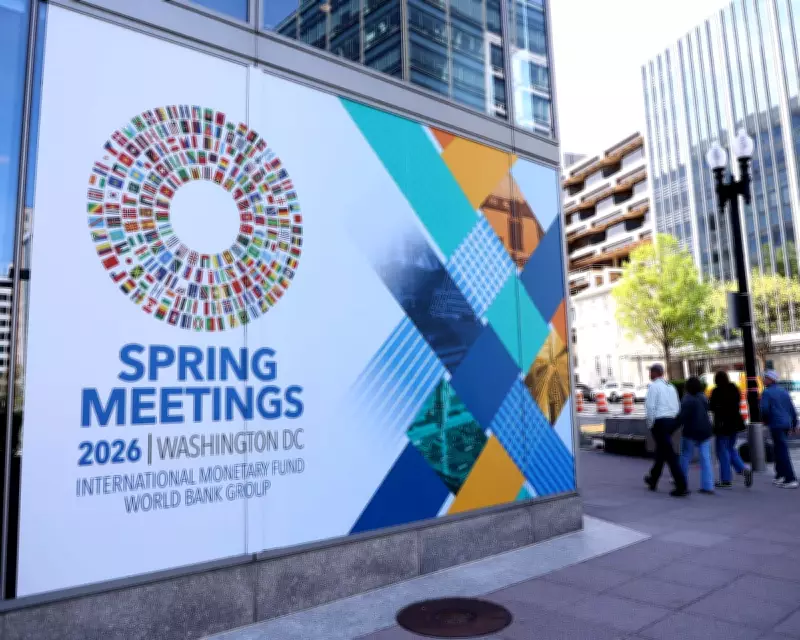
This week, finance ministers and central bank governors from around the world are gathering in Washington, D.C., for the half-yearly meetings of the International Monetary Fund and the World Bank. The global economy finds itself in a perilous position, grappling with the most significant energy shock in decades, driven by the ongoing US-Israeli war on Iran.
Unprecedented Economic Turbulence
Not since the establishment of the Bretton Woods institutions at the end of World War II have global conflicts caused such severe economic disruption. The volatile 1970s come close, but the current Middle East crisis, following closely on the heels of the Covid pandemic and Russia's invasion of Ukraine, takes the prize for creating widespread instability.
Even if a durable peace deal is eventually reached in the region, permanent economic scars will remain. Living standards across wealthy nations were already stagnating before the conflict. Now, six weeks of intense bombing by US and Israeli forces, coupled with Tehran's retaliatory actions—including the closure of the Strait of Hormuz—are placing immense pressure on households already struggling with high costs.
The Biggest Energy Shock of the Modern Era
This conflict has triggered the largest energy shock in recent history. Oil and gas prices have surged dramatically, inflation is on the rise, borrowing costs have increased, and a food security crisis is looming. Unlike trade tariffs, which can be reversed by policy changes, the damage from airstrikes and drone attacks is long-lasting, destroying infrastructure that will take years to rebuild.
Insurance premiums have skyrocketed, and business confidence has been shattered. While there are fragile hopes for de-escalation as the US and Iran engage in talks in Pakistan, global oil prices, though down from a peak near $120 per barrel, remain elevated above pre-conflict levels of $72.
IMF Cuts Growth Forecasts Amid Uncertainty
In response to the crisis, the IMF has announced it will cut its growth forecasts for 2026 in its upcoming World Economic Outlook report. In every scenario, growth is projected to be slower and inflation higher, with households worldwide feeling the pain. The world's poorest populations will bear the brunt of this economic downturn.
More depressingly, the fund noted that had it not been for the war, it likely would have upgraded its forecasts. Before the conflict, global growth had shown surprising resilience, supported by an AI-driven investment boom, cooling inflation, and improving financial conditions.
Challenges to Global Cooperation
At this week's meetings, the priority is to limit the economic fallout. IMF Managing Director Kristalina Georgieva has urged officials to work together, warning against "go-it-alone actions" such as protectionist subsidies, price caps, and export controls, which could exacerbate the situation. "Don't pour gasoline on the fire," she cautioned last week.
However, the world is fracturing. Countries are burdened with high debt levels from past economic shocks, leaving them with diminished capacity to respond. Additionally, rising defence spending demands are forcing governments into difficult trade-offs.
Central Banks and Political Pressures
The IMF advises that any energy support measures should be targeted and temporary to avoid stoking inequality. For central banks, vigilance is key; without the war, interest rates might have been lowered this year, but now markets expect rates to be held steady or increased to combat entrenched inflation.
Beyond economic issues, many finance ministers face political challenges. Progress on living standards has stalled in advanced economies over the past two decades, leading to voter impatience and a rise in populism. Heeding simplistic solutions has contributed to the current global instability.
Irony in Washington
There is a certain irony in these meetings taking place in Washington, D.C., the capital of a nation often seen as pursuing go-it-alone policies, within institutions founded to promote global cooperation. This situation represents the economic Gordian knot of our time: economic and political instability are interlinked, with stronger growth needed to alleviate high debt and voter dissatisfaction, yet governments lack the resources to stimulate it.
Eight decades ago, the IMF and World Bank were created to prevent a repeat of the dire economic conditions that led to World War II. Today, they face one of their toughest challenges yet, as the Iran war's fallout threatens to leave lasting scars on the global economy.