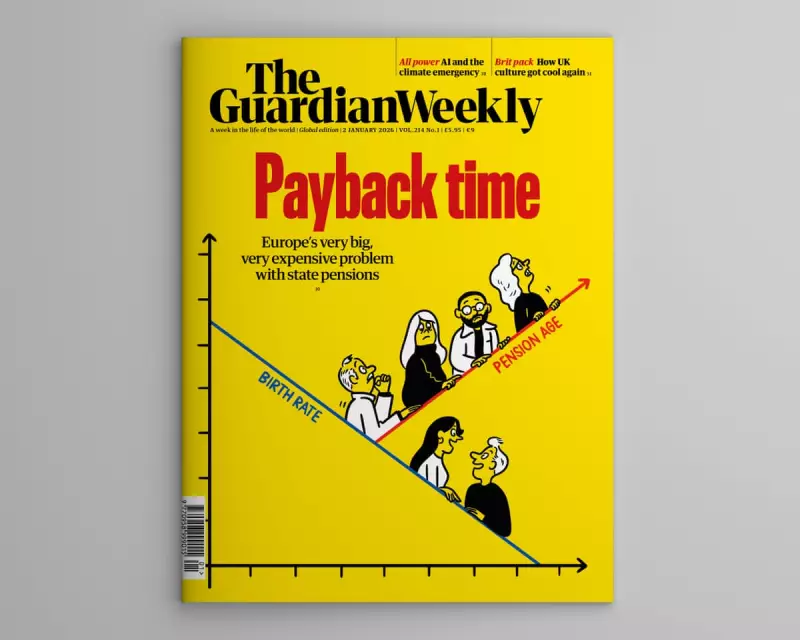
As the new year of 2026 dawns, a profound economic dilemma is casting a shadow over the retirement dreams of millions across Europe. The continent is grappling with an escalating state pensions crisis, fuelled by ageing populations and shrinking workforces, which threatens the very foundations of its social contract.
The Unsustainable Equation
A revealing new poll conducted across six European nations has uncovered a stark public contradiction. Most voters clearly recognise that their national pension systems are on an unsustainable path and will soon become unaffordable for the state. This awareness stems from a simple demographic reality: as populations grow older, the number of younger workers paying into 'pay as you go' schemes is shrinking, leaving a ballooning cohort of retirees to be supported.
Yet, in a paradox that leaves governments in a political bind, the same poll shows that citizens simultaneously believe their state pensions are already too low. Furthermore, they are largely unwilling to support the necessary reforms – such as raising the retirement age or increasing contributions – that economists argue are essential to stabilise the systems. This places leaders, many already under pressure from populist movements, in an almost impossible position.
A Continent-Wide Timebomb
For the Guardian Weekly's first major story of 2026, Europe correspondent Jon Henley investigates this ticking timebomb. The report, titled 'It’s payback time', delves into the complex economic reality behind the aspiration for a comfortable retirement. The core issue is the viability of intergenerational solidarity, where current workers fund the pensions of the retired, a model strained to breaking point by demographic shifts.
The question Henley poses is urgent: Where do governments go from here? With public opinion split between acknowledging the problem and rejecting the solutions, crafting a politically palatable yet economically responsible path forward is the defining challenge for European policymakers in the coming years.
Other Highlights from the 2 January Edition
This week's Guardian Weekly offers a broad spectrum of in-depth reporting beyond the pensions crisis:
Spotlight on Ukraine: Dan Sabbagh analyses the prospects for peace in Ukraine in 2026. With battlefield advances by Russia and peace talks deadlocked – despite optimistic signals from Donald Trump – the piece suggests Kyiv's best hopes may lie on economic and political fronts.
Science and Climate: Ajit Niranjan reports on the environmental threat posed by artificial intelligence. The piece examines how the datacentres powering AI are polluting the natural world, with experts fearing the exponential rise in demand could derail the transition to a clean economy.
Feature: Return to the West Bank: Former Guardian correspondent Ewen MacAskill returns to the Palestinian Territory after two decades. He documents his shock at how much conditions have deteriorated since his last visit.
Opinion: Columnist Martin Kettle shares a heartening story of a single act of kindness, arguing it is a reminder that human goodness is not doomed, despite evidence to the contrary.
Culture Boom: Rachel Aroesti investigates the current moment for UK culture, from the music of Charli XCX to the iconic chicken shop. The feature questions whether this vibrant scene can be future-proofed against the homogenising forces of globalisation.
The edition also includes a look at the legacy of Bradford's year as UK City of Culture in 2025, asking whether the injection of cash and optimism can have a lasting impact on the city.