Americans are increasingly worried about what artificial intelligence means for their future. According to a recent Quinnipiac poll, eight in ten Americans express concern over AI, while only a third report excitement. More than half believe AI will cause more harm than good in daily life, and seven out of ten think it will reduce job availability.
Despite this skepticism, AI is about to be forced into their pension plans and investment portfolios, whether they want it or not. This week marks the massive $75 billion initial public offering (IPO) for Elon Musk's SpaceX, the largest ever. Priced at $135 per share, it values the company at $1.77 trillion, placing it among the ten largest companies globally by market capitalization. While SpaceX primarily generates revenue from internet access, the IPO funds are largely intended for Musk's ambitious AI projects, including launching data centers into orbit.
This offering is just the beginning. Both Anthropic and OpenAI have filed paperwork for their own IPOs later this year, which will add two multi-trillion-dollar AI giants to U.S. stock indices. Even investors who avoid buying these stocks directly will end up owning them through 401(k) retirement plans or market index funds, which are forced to hold AI shares in proportion to their index weightings.

While this may not happen immediately, it is inevitable. Musk has lobbied for SpaceX to be quickly added to major indices, forcing index funds to buy the stock regardless of price. The tech-heavy Nasdaq has already changed its rules to fast-track listings of behemoths like SpaceX, and FTSE Russell has done the same for its U.S. indices. Standard & Poor's, however, maintains its rules, requiring SpaceX to post a profit, meet a minimum public float, and wait about a year before joining the S&P 500. The SpaceX offering represents less than 5% of its shares, limiting its immediate impact.
If SpaceX follows the pattern of large firms after their IPOs, about half its shares could be publicly traded by the time it joins the S&P 500 next year. This would give it roughly a 1.5% share of the S&P 500's $60 trillion market capitalization, forcing index funds to pour hundreds of billions into Musk's quest to become the world's first trillionaire.
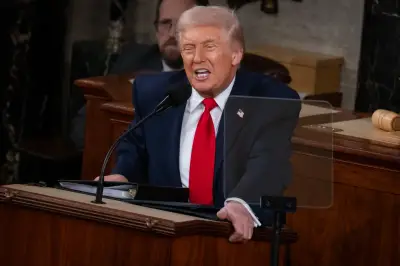
This is a risky bet. Musk, who led efforts to dismantle federal bureaucracy and USAID despite knowing the humanitarian consequences, will have sole control over a company that many Americans' retirements may depend on. The so-called 'magnificent seven' tech giants—Nvidia, Alphabet, Apple, Amazon, Microsoft, Meta, and Tesla—already account for more than a third of the S&P 500's market value. Adding SpaceX, OpenAI, and Anthropic will give tech billionaires even tighter control over Americans' financial futures as they pursue unregulated, dystopian sci-fi dreams.
There may be a silver lining: holding AI stock in retirement plans could hedge against job displacement by AI, giving displaced workers a stake in the new economy. However, the balance of risks is unfavorable. The promise of AI supercharging productivity and prosperity remains unfulfilled. Claims of progress have not translated into significant productivity gains. Dystopian scenarios seem increasingly likely, while the economic rewards investors count on remain distant.
Money eventually tires, scares, and moves on to new stories. The Nasdaq recently fell more than 4%, shaken by indications that a strong labor market may force the Federal Reserve to raise interest rates. This serves as a reminder that the AI-driven rally in the Nasdaq and S&P 500 could end abruptly—perhaps just beyond Musk's trillionaire moment.
Americans do not know what an AI-heavy future holds, but they have vivid memories of the pain from financial bubbles built on hubris. The 2008 financial crisis would pale in comparison to the fallout if the AI dream embedded in their investments turns into a nightmare.