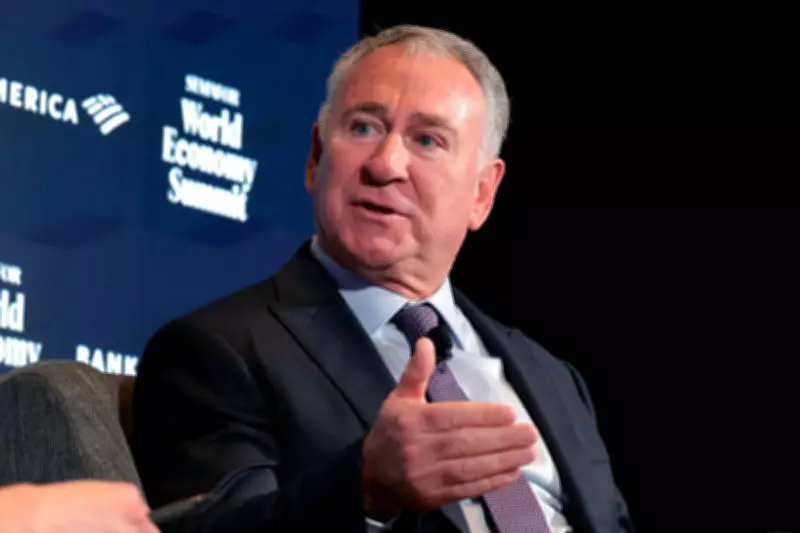
Hedge fund billionaire Ken Griffin has questioned whether wealthy individuals truly understand the risks associated with investing in private credit, as the industry faces mounting pressure from investors seeking to withdraw their capital. Griffin, the founder of $67 billion hedge fund Citadel and trading firm Citadel Securities, is the latest prominent financial leader to comment on the sector's fate amid concerns over bad loans and redemption requests.
Industry Crisis and Retail Investors
The private credit industry entered a crisis after opening its doors to wealthy individuals, moving away from its traditional base of institutional investors such as insurers and pension funds. Courting retail investors often involves offering regular withdrawals through so-called 'semi-liquid' funds that have no formal end date. Since 2021, these products have attracted nearly $200 billion (£148.1 billion). However, if all investors rush to exit simultaneously, firms must either provide substantial cash quickly or restrict withdrawals.
In an interview with the Financial Times, Griffin argued that investors do not fully grasp the liquidity dynamics of the industry. "The real issue here is the liquidity mismatch between the retail investor and the duration of the investments," he said. "We live in a world where retail investors have become accustomed to having immediate liquidity for their investments… investing in private credit is a different story."

Big Firms Feel the Crunch
Some of the world's largest alternative investment firms, including Blackstone, Apollo, Blue Owl, and KKR, have experienced the strain after launching funds aimed at wealthy investors. Griffin questioned whether retail investors truly understood "the nature of the investment they were making." Blue Owl was the first to show signs of distress, limiting withdrawals from two flagship funds after a wave of redemption requests and concerns over its exposure to software companies. Rating agency Moody's subsequently downgraded its outlook on the firm from stable to negative, expecting redemption requests to "persist in the coming quarters" and potential slowing of inflows.
JPMorgan Chase CEO Jamie Dimon also warned in his annual shareholder letter that losses for lenders to highly indebted companies would be higher than many anticipate due to weaker lending standards. Speaking at the Norges Bank Investment Management Conference on Tuesday, he cautioned that this could lead to a credit recession that "will be worse than people think."
Goldman Sachs Bites Back
However, Goldman Sachs' president pushed back against the notion that the crisis is primarily driven by investors, instead criticizing firms for failing to market private credit funds clearly to individual investors. John Waldron, president and chief operating officer, noted that private credit's "massive growth" demands attention, as retail investors now account for one-fifth of the market's size. Speaking at a Semafor event earlier this month, he said: "Not everybody has marketed their product as clearly as, certainly we would like to see with the clarity that this is really not a liquid product. It's not semi-liquid. It's really illiquid. Those retail investors, I think, have the perception of more liquidity than is the reality." Investors in Goldman's own semi-liquid private credit fund sought to redeem just under 5% of their assets in the first financial quarter, up from 3.5% in the final quarter of 2025, but this remained below the industry average, and the firm fulfilled all redemption requests.