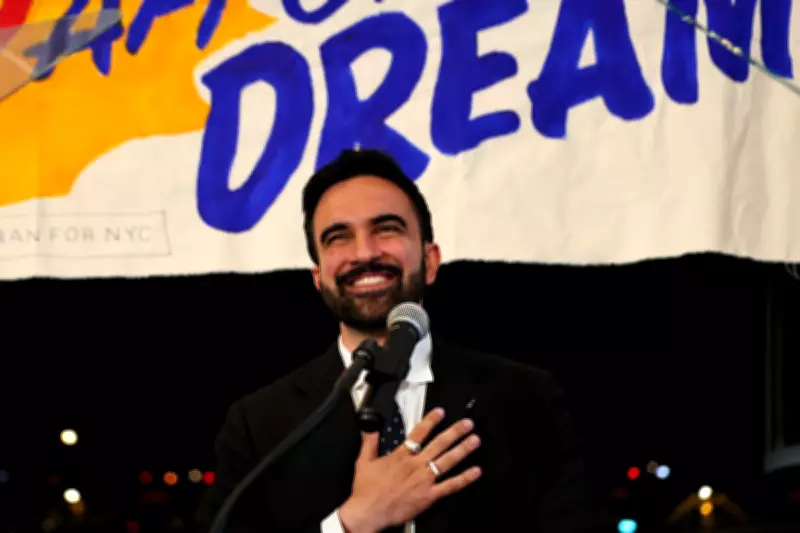
The Mamdani Effect: Youth Leadership Reshaping Business Boardrooms
Zohran Mamdani's election as New York mayor last year, along with youth-led movements in Bangladesh and Nepal, has been widely covered as political news. However, these events point to a broader societal and business trend: a growing expectation that leadership should reflect, or at least consider, those who will live longest with the consequences of today's decisions. This shift, often termed the Mamdani Effect, is increasingly relevant in corporate environments where traditional structures clash with the expectations of younger employees, customers, and investors.
Bridging the Generational Gap in Corporate Leadership
Through work with over 170 corporates supporting One Young World, it's evident that a widening gap exists between traditional organizational structures and the aspirations of younger stakeholders. In an era of rapid change, this gap is becoming harder to ignore. The business case for paying more attention to young talent centers on decision-making in a fast-evolving environment. It's not merely about representation, which can sometimes amount to little more than youth washing. Senior leadership teams often bring valuable experience and caution, but they can also default to incremental thinking.
Younger professionals are more likely to push for faster adaptation, particularly in areas like technology, climate action, and workplace culture. This matters because expectations are shifting in real time. The rise of conscious quitting exemplifies this trend, as employees, especially early in their careers, increasingly leave organizations that lack credible commitments to social and environmental issues.
Practical Implications for Businesses
For businesses, this creates a practical challenge. Companies that fail to reflect these expectations in their leadership and decision-making risk losing talent and relevance over time. Conversely, those that adapt are more likely to stay connected to the workforce and customers they aim to serve. The One Young World 2026 Summit in Cape Town, hosted by young mayor Geordin Hill-Lewis, underscores this global movement, highlighting how youth leadership is gaining momentum across continents.
Youth Innovation in Climate Action
On Earth Day, it's crucial not to let global conflicts overshadow the ongoing work of young leaders driving innovation to tackle climate change. For instance, Franco Rodriguez Viau founded Satellites on Fire at sixteen, developing an AI system that detects wildfire outbreaks up to seven hours faster than NASA systems. This technology already protects 56 million hectares across 19 countries, and he recently raised $2.7 million for AI-driven climate adaptation projects.
The Unifying Power of Sport and Community
Events like the London Marathon capture the spirit of unity and shared determination, challenging discrimination and building bridges. This ethos aligns with the values of One Young World, emphasizing that strength lies in commonalities rather than divisions. As participants run in such events, they carry the support of entire communities, symbolizing global solidarity.
In a world often divided, initiatives like the pilgrimage of Texan Buddhist monks, documented on social media, remind us of the power of peaceful action. Their 108-day journey from Fort Worth to Washington DC united people worldwide, demonstrating that simple acts can foster connection and hope.
Kate Robertson, co-founder of One Young World, emphasizes that every war ends in peace, and the sooner, the better. As youth leadership continues to influence both politics and business, the Mamdani Effect serves as a call to action for senior leaders to embrace change and inclusivity in boardrooms everywhere.