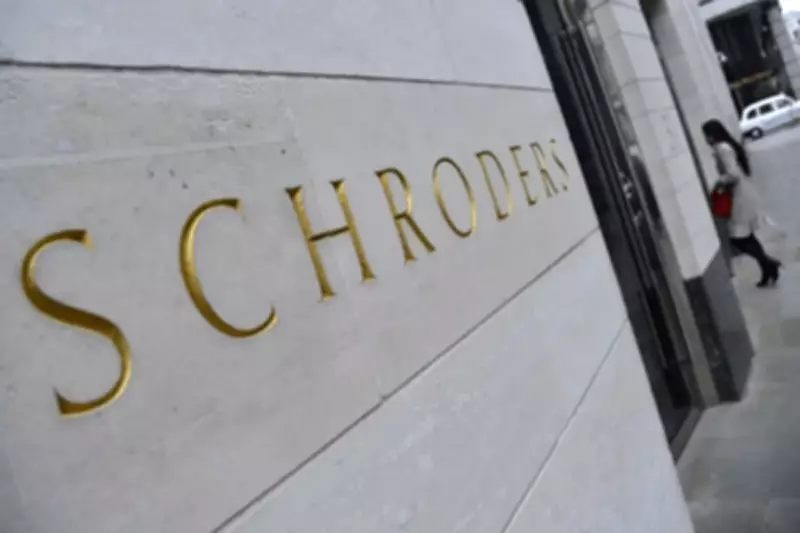
Schroders-Nuveen Merger: Tech Integration, Not Finances, Is the Real Test
In the world of high-stakes finance, the City of London has long been captivated by takeover stories that blend ambition with deep pockets. The recent acquisition of Schroders, one of London's most historic investment houses, by the $2.5 trillion US asset management giant Nuveen for £10 billion is no exception. On the surface, this mega-merger promises continuity: the Schroders brand remains intact, its headquarters stays in the Square Mile, and the new owner has pledged to maintain the wealth management business. However, beneath the top-line numbers and public assurances, the real test of this and other recent mega-mergers lies not in the dealing desks or investment committees, but in the intricate technology engine rooms that power modern-day investing.
The Financial Reality Driving Consolidation
Strip away market performance and inflows, and the financial landscape across the asset management sector reveals a less rosy picture. Profitability per asset has been steadily declining for years, driven by the relentless compression of margins from passive products and rising operating costs due to increased regulatory reporting burdens. Faced with this harsh reality, it is no surprise that many asset managers are turning to consolidation as a strategy to bolster their top lines and achieve economies of scale.
Yet, the evidence that this approach delivers on its promised benefits is mixed at best. Most asset managers already grapple with obtaining a clear, timely view of their overall risk, often relying on layers of workarounds and manual processes to piece together data. When another firm's systems and data are integrated into the mix, the complexity multiplies exponentially. While an enlarged business might eventually rebuild that same delayed view across a bigger portfolio, the real cost is often a loss of agility and operational efficiency.
The Technology Integration Challenge
One of the most significant hurdles in these mergers is the clash of technological infrastructures. One organisation may depend on legacy databases built decades ago, while the other operates on cloud-native platforms designed for highly sophisticated analytics. Risk models, pricing feeds, benchmarks, and client reporting frameworks rarely align neatly, and even fundamental definitions of performance or exposure can differ. Asset managers must maintain outward stability for clients while quietly rebuilding the foundations underneath, a balancing act that is rarely visible in the initial deal terms but ultimately determines the merger's success.
Institutional investors demand a single, consistent view of risk across the combined business, while regulators require clear data lineage and harmonised reporting. Simultaneously, investment teams expect uninterrupted access to the systems they trust. Meeting all three expectations at once necessitates a unified understanding of investment data across the entire organisation, a task that is far more complex than it appears on paper.
The Evolving Role of Technology in Mergers
Historically, technology integration was treated as a background concern in these deals—a multi-year cleanup exercise to be addressed after the headlines faded. Today, that dynamic is shifting dramatically. Modern asset managers operate across public and private markets, regions, and time zones, navigating increasingly complicated regulatory regimes. Technology now shapes how quickly firms can integrate acquisitions and manage risk, making it a critical factor in the success or failure of mergers.
London's role in this transformation is also evolving. As operating models become less tied to geography, investment teams collaborate across continents, and clients expect real-time transparency regardless of location. The infrastructure that holds everything together increasingly resides in shared digital platforms rather than physical headquarters. Ultimately, successful asset managers will be those that can unify their investment data, maintain a clear whole-of-book view, and integrate new capabilities without creating further fragmentation.
While brand continuity may reassure markets in the short term, it is operational coherence that decides whether consolidation delivers genuine value to investors over the longer run. The Schroders-Nuveen merger serves as a stark reminder that in today's asset management landscape, the real battle is fought not in boardrooms, but in the technology engine rooms that keep the pulse of investing alive.