Businesses Continue to Face Legal Uncertainty Despite Court Ruling on Tariffs
When the US Supreme Court delivered a landmark judgment against President Donald Trump's tariffs last week, the ruling sent shockwaves across the globe, raising critical questions about the future for businesses. On Friday, the Supreme Court, with its 6-3 Conservative majority, struck down the tariffs, a decision that could pose significant financial consequences for the Trump administration.
The Legal Basis and Ruling
The ruling centered on the 1977 International Emergency Economic Powers Act, which had allowed Trump to regulate imports during a national emergency. However, Chief Justice John Roberts, who led the decision, stated: "The President asserts the extraordinary power to unilaterally impose tariffs of unlimited amount, duration, and scope." Despite this, the top court did not address how the government should implement the decision or whether it should refund the over $200 billion in tariffs collected over the past year.
Trump's Response and New Tariffs
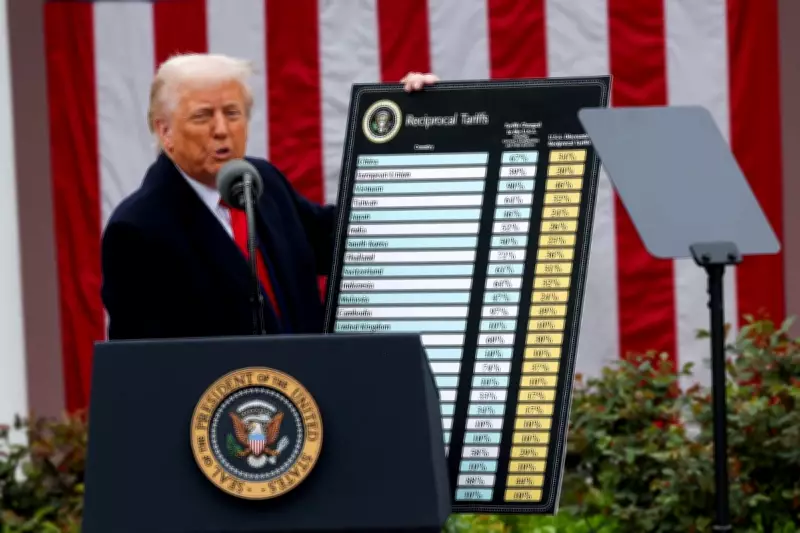
Immediately after the shocking ruling, Trump warned of implementing a 10 percent across-the-board tariff for 150 days to replace those struck down by the Supreme Court. This was subsequently raised to 15 percent over the weekend, adding to the confusion and uncertainty for businesses.
Implications for Businesses
Alexis Early and Dan Mach, partners at BCLP, explained that the Supreme Court also remanded one of the cases back to the US Court of International Trade to address next steps, which are likely to include refunds. "There is historical precedent for issuing refunds of fees unduly collected under a regulatory scheme, and US Customs and Border Protection has an existing standard administrative refund process," they added. This follows Justice Kavanaugh's note during oral arguments that a refund process could be a "mess."
If companies are permitted to seek legal action against the US government, Ian Hargreaves, partner at Quillon Law, told City AM that "a UK company that lost export business because tariffs made its products too expensive could argue that its losses were directly attributable to the unlawful tariffs." However, he noted that such a claim might be commercially unattractive for any business seeking a future trading relationship with the US.
Ongoing Legal Uncertainty
Totis Kotsonis, partner at law firm Pinsent Masons, added that while "businesses might in principle welcome the Supreme Court's decision, at the same time they might consider less welcome the fact that the judgment provides for yet another layer of legal uncertainty." Trump's new legislation, which he is now utilizing, grants him 150 days to find another legal route to extend the tariffs further. With billions of dollars at stake, he will be calling in lawyers to identify a solution.
The US president boasts one of the largest in-house legal teams in US political history, following several pledges of pro bono work totaling $940 million after his focus on Big Law. "Donald still holds the trump card in that countries need to do business with the US," Hargreaves concluded, underscoring the complex dynamics at play.