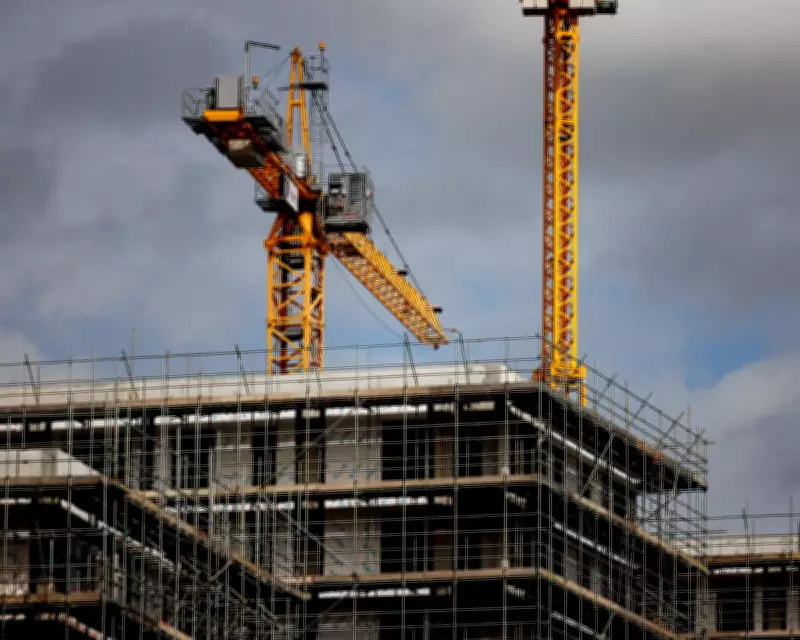
UK construction companies are experiencing some of the sharpest cost increases in nearly three decades, driven by the war in Iran that has pushed up prices for fuel and raw materials, according to a closely watched survey.
Cost Inflation at Highest Since 2022
The purchasing managers’ index (PMI) for construction activity revealed that input cost inflation—covering expenses such as raw materials, energy, and labour—rose last month to its highest level since June 2022, when commodity prices spiked following Russia’s invasion of Ukraine. April’s jump in purchasing prices was also among the steepest since the survey began in 1997.
PMI Reading Shows Contraction
The monthly PMI for construction activity fell to 39.7 in April, the lowest since last November and down from 45.6 in March. Readings above 50 indicate growth, while those below signal contraction. The index has not shown growth since January last year.
Impact on the UK Economy
Construction is one of the largest sectors of the UK economy, accounting for about 7% of GDP and employing over two million people. The Labour government had pledged to “get Britain building again” by boosting infrastructure and building 1.5 million more homes by 2030. However, the sector has faced subdued demand, an ageing workforce, and higher costs over the past two years. The Middle East conflict is exacerbating these challenges by increasing business uncertainty and costs.
Expert Commentary
Tim Moore, economics director at S&P Global Market Intelligence, which compiles the PMI survey, stated: “A rapid acceleration of input cost inflation was seen across the UK construction sector in April. Aside from the post-pandemic surge from early 2021 to mid-2022, the latest rise in purchasing costs was the steepest in three decades of data collection.” He added that about two-thirds of surveyed companies reported higher cost burdens in April, overwhelmingly linked to suppliers passing on higher fuel costs due to the war and the Strait of Hormuz shipping blockade, along with subsequent rises in raw material prices.
Supply Chain Disruptions
Delivery times from vendors increased at the sharpest pace since December 2022, attributed to international shipping delays and difficulties importing materials from the Gulf region. Construction firms noted that new work was not replacing completed projects, and sales conversion times were lengthening. The lack of new projects led several companies to avoid replacing staff who left voluntarily.
Profit Warnings and Revenue Drops
This month, UK housebuilders Crest Nicholson and Berkeley issued profit warnings, citing the Iran war for rising costs and falling demand. Travis Perkins, the UK’s largest builders’ merchant, reported last week that trading in the first quarter of the year had been “challenging,” with revenue down 1.7% as construction activity levels remained subdued.