
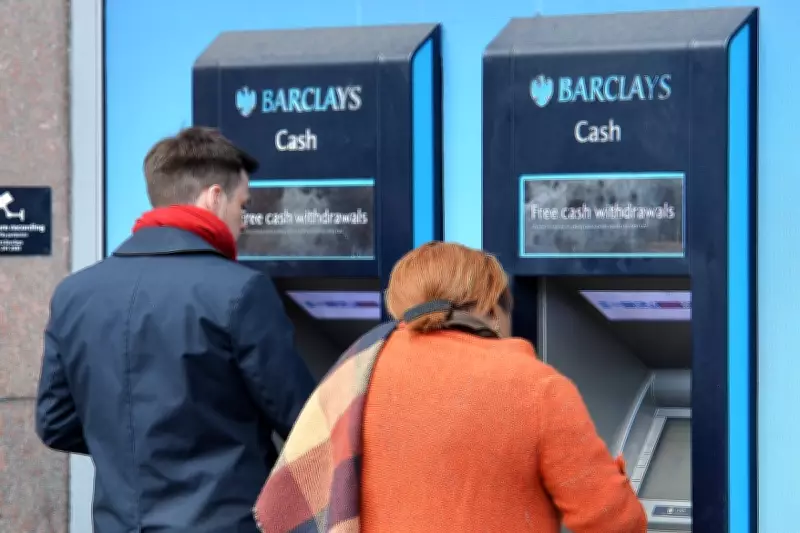
Barclays' Dramatic High Street U-Turn Reveals Banking Industry Crossroads
While Westminster politicians frequently engage in semantic debates about policy "pivots" versus full reversals, the City of London has witnessed a genuine handbrake turn that leaves visible skid marks across Britain's retail landscape. Blue-chip banking giant Barclays, which spent the last decade leading the industry's aggressive branch closure program, has suddenly rediscovered the value of physical presence.
The Great Branch Revival Strategy
Barclays has announced a significant strategic shift, emphasizing the importance of "physical presence" and the "ability to talk" to colleagues in person. This marks a dramatic reversal for an institution that shuttered a staggering 1,236 branches over the past ten years as part of a broader industry exodus from high streets across the United Kingdom. A key element of this new approach involves the return of bank managers – positions that had practically evaporated during Barclays' aggressive digital transformation push.
After spearheading the branch closure movement alongside its big four peers HSBC, Natwest, and Lloyds, Barclays now acknowledges the enduring human preference for face-to-face interaction over chatbot conversations. This realization comes after the bank closed more branches than any of its competitors during the digital migration phase.
Competing Visions for Banking's Future
While Barclays executes its screeching U-turn, the banking industry reveals an ever-widening strategic divergence. Barclays' move follows HSBC's commitment last December to keep all branches open until at least 2027, with Europe's largest lender pledging to invest £55.8 million into its 327 locations – representing a 30 percent increase from the previous year. This investment includes the launch of a premium wealth center in central London with panoramic city views, targeting affluent customers.
Nationwide Building Society has positioned itself as perhaps the strongest advocate for physical banking, committing to keep all branches operational until 2030. Meanwhile, Metro Bank has demonstrated the potential viability of branch-based banking by returning to profitability and announcing plans to expand its physical network.
The Digital Acceleration Camp
On the opposite side of this strategic divide, rival institutions continue their rapid retreat from physical locations. Lloyds Banking Group announced in February it would close an additional 95 branches, reducing its total network to just 610 locations compared to over 1,500 a decade ago. The banking giant has simultaneously pursued ambitions to become "the UK's biggest fintech," doubling down on technological transformation to compete with digital-native challengers.
Santander shares this digital-first perspective, recently announcing 44 branch closures while focusing resources on enhancing its online offerings. Though Santander maintains some physical presence through its work cafes – open spaces offering banking services alongside coffee and food to both customers and non-customers – its strategic direction clearly prioritizes digital channels.
Fintechs Enter the Physical Realm
Even as established banks debate physical versus digital strategies, fintech challengers are beginning to explore hybrid approaches. While digital-first banks naturally lack interest in extensive branch networks, several have demonstrated willingness to establish limited physical presence. Money transfer firm Wise recently launched a pop-up branch to promote its new UK current account, while newly licensed digital bank Revolut has sparked industry speculation about potential "experience" ventures.
Barclays' strategic reversal serves as a clear indicator that high street banking units are not dead-end propositions for the financial sector. However, it simultaneously reveals that industry titans are increasingly diverging onto two distinct paths: one racing toward an online-only horizon, and another recognizing that physical presence may gradually become a premium differentiator in an increasingly digital world.
The banking industry's fundamental divide has never been more apparent, with institutions placing radically different bets on where true value lies in serving modern consumers. As Barclays shifts attention back to the high street while Lloyds accelerates its digital transformation, the sector's future appears destined to accommodate multiple competing models rather than converging on a single approach.




