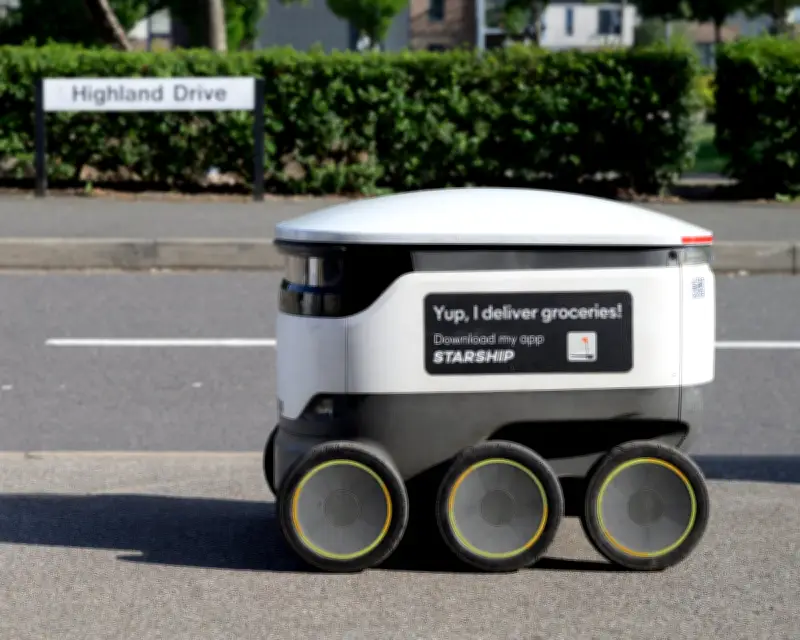
Starship Technologies' six-wheeled delivery robots, which have been roaming the streets of Milton Keynes for over eight years, could soon become a common sight across the United Kingdom under proposed new laws governing micromobility vehicles. The robots, currently used to deliver Co-op orders in the Buckinghamshire city, have already been deployed in Wakefield, Leeds, and Bristol via Just Eat, and the government is reportedly considering approving them for nationwide pavement travel.
Residents praise convenience but raise concerns
Amrita Singh, a 46-year-old project manager in Milton Keynes, describes the robots as a "wonderful experience." She often uses them, especially when her husband travels for work and she is alone with her children. "It has proved to be very useful for me," she says. During a test delivery to her home, the robot completed the journey from the local Co-op in five minutes, faster than the seven-minute walk estimated by Google Maps, though slightly slower than a three-minute bike ride. The robot, equipped with radars, cameras, sensors, and AI, navigated crossings and avoided pedestrians, including a mother with a pram.
Disability and safety advocates warn of risks
However, disability and pedestrian safety charities have expressed caution. In 2019, the University of Pittsburgh paused testing of Starship robots after a doctoral student using a wheelchair reported being trapped by one blocking an accessible ramp. Catherine Woodhead, chief executive of Living Streets, says the robots are "causing chaos for pedestrians despite having no clear laws for their use" and calls them "dangerous" for older, disabled, blind, or partially sighted people, as well as parents with buggies. "Pavements are for people," she asserts.
Starship's head of public affairs, Lisa Johnson, previously told the BBC that the robots "recognise" mobility devices such as wheelchairs or scooters and would "get out of the way." If that is not possible, she said "human backup" would be alerted to move the robot remotely.
Technical glitches and vandalism
During the test delivery, a technical glitch occurred: after Singh retrieved her shopping, the app failed to register the order as complete, leaving the robot stationary outside her home. Despite attempts to push the 38kg robot, it remained stuck until a customer service agent acknowledged the error and arranged for its retrieval. George Domnar, 38, who moved to Milton Keynes from London in 2018, says his sons, aged seven and one, "love the robots" and often chase them. However, he doubts the robots would thrive in London due to crowded streets and potential vandalism. "I think they will be damaged all the time. People will do it for fun because, sadly, it's human nature," he says.
Stacey Cordes, 38, a department store worker, says the robots are "really good when the kids aren't beating them up and chucking them in rivers." She uses them occasionally for urgent needs like feminine products and urges respect for the robots to ensure their continued availability. "The more people look after them, the more people can use them," she says.