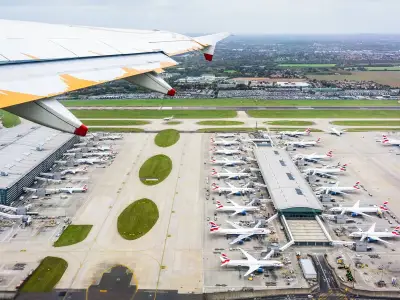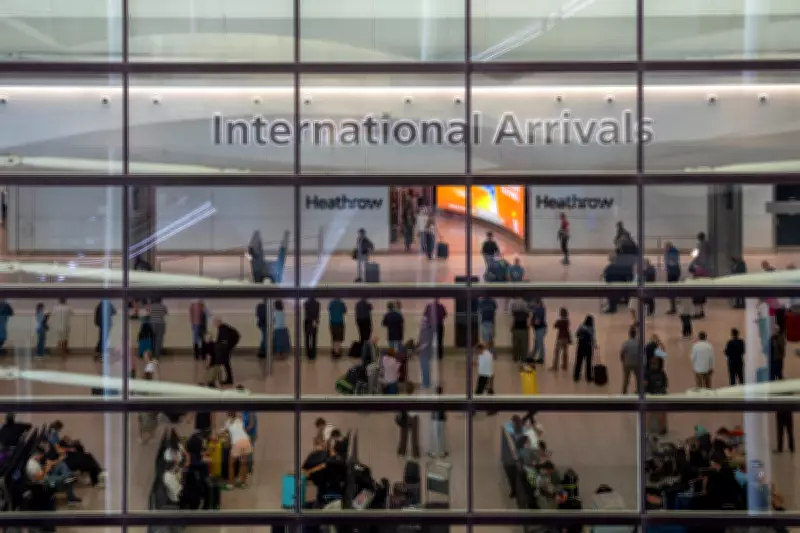
Heathrow, London's main gateway and the UK's busiest airport, issued a stark warning over its capacity on Wednesday, as war in the Middle East drove a surge in demand for flight transfers.
"Heathrow is full," said its chief financial officer, Sally Ding, speaking alongside the release of first-quarter results. The airport handled 18.9 million passengers in the first three months of 2026, a 3.7% increase year-on-year.
Closures of airspace due to the Iran war have led to a rise in transfer passengers, a trend expected to continue as geopolitical uncertainty persists, affecting Dubai, one of Heathrow's main international rivals for global connections. Heathrow's trading update stated that it had "temporarily absorbed demand from elsewhere" and that "passenger numbers for the rest of the year are likely to be impacted whilst there is significant uncertainty in the Middle East." Revenue in the first quarter rose 2.3% to £844 million.

However, as the long-running saga over planning approval for a third runway drags on, Ding warned that Heathrow's operating capacity meant "fewer choices and higher fares for passengers and missed opportunities for the UK economy." In an appeal for full backing for expansion plans at the 80-year-old West London hub, she added: "Expansion is about delivering more routes, more competition and ultimately better outcomes for the people and businesses who rely on us."
Heathrow's Expansion Plans
Heathrow's £50 billion bid to boost capacity has been mired in political controversy for years. Its plan for a new 3.5-kilometre runway would increase passenger capacity to 150 million a year from 84 million, allowing 756,000 flights annually, up from 480,000 currently.
"Our plan is privately financed, rigorously assessed and focused on value. With the right regulatory framework and government policy in place, we are ready to invest, grow and keep the UK connected to the world," Heathrow said on Wednesday. The scheme involves altering part of the M25, London's orbital motorway, by moving it into a tunnel.
For the first time in Heathrow's history, the government considered a rival expansion plan from another company. The cheaper bid, priced at £25 billion and tabled by the Arora Group, would have avoided the M25 entirely. It was rejected last autumn by Transport Secretary Heidi Alexander, who selected Heathrow's plan. However, the project has been further delayed by a government review of its overarching strategy in the Airports National Policy Statement, now expected this summer.
Environmental groups and local residents oppose any expansion of Heathrow, and London Mayor Sadiq Khan has spoken out against the plans due to concerns over air pollution, noise, and climate impact. Business leaders have long called for expansion, viewing it as essential for national economic growth.
Heathrow said on Wednesday: "Progress now depends on upcoming regulatory decisions from the Civil Aviation Authority and the government's draft Airports National Policy Statement in July, which are critical to maintaining investor confidence and keeping plans on track for planning permission by 2029, with the most imminent milestone being the CAA consulting on its short list of regulatory models for expansion in coming weeks."