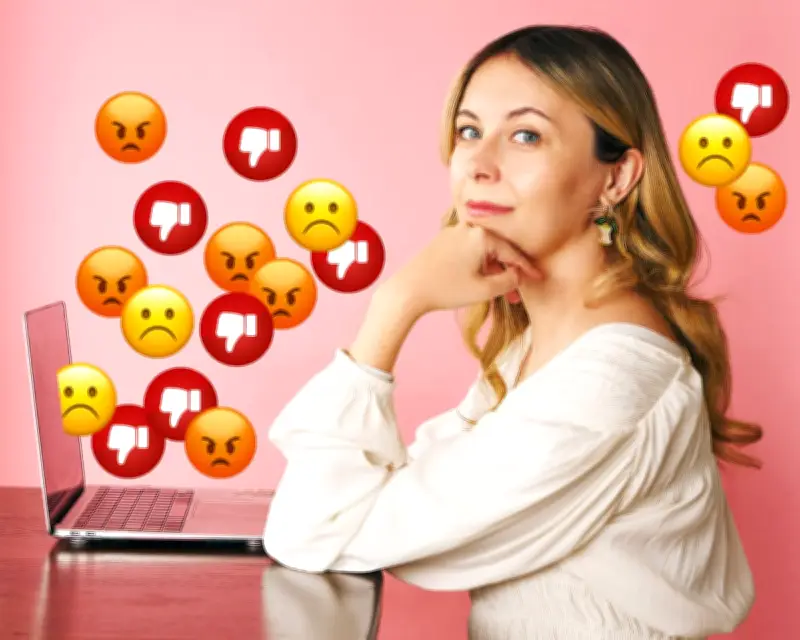
Twenty years ago, Amelia Tait briefly became the victim of a viral pile-on after posting a silly YouTube video. Now, as a debut children's author, she reflects on how lucky she was to embarrass herself and move on—and questions whether today's teens are so fortunate.
The Viral Video That Didn't Define Her
In the summer of 2006, Tait, then 14, and her friends Jessie and Emma filmed themselves singing along to Queen's Bohemian Rhapsody. They were overheated and hyperactive, jumping and headbanging. Tait added captions implying they were drunk, though she had only been clutching a bottle of J2O. She uploaded the video to YouTube on 19 September 2006 under the title 'Bohemian Crap-sody'.
The comments poured in. 'There is a special place for girls like you in hell,' wrote one man. 'I now understand why people become serial killers,' offered another. The video accumulated 48,526 views. At the time, the most-subscribed YouTube channel had fewer than 3,000 followers. More than 100 pages of hate comments felt like a lot.
A Different Internet Era
Tait notes that the internet has transformed since then. 'Once upon a time, the internet was a place you visited, a place you could leave,' she says. No one at school saw her video, and it couldn't be easily screenshot or shared. She retained the power to erase every trace. Today, the internet is all around us, and many feel stuck. A Yahoo/YouGov poll in April found that more than half of Gen Z adults have avoided expressing themselves freely online for fear of coming across as cringe.
Contrast Tait's experience with that of Rebecca Black, who at 14 posted her debut music video 'Friday' in 2011. It became the most disliked YouTube video that year. Black had to drop out of school due to intense bullying, and police got involved after death threats. Similarly, Lauren Willey, then 17, created a satirical video called 'Hot Problems' in 2012. It went viral with nearly 3 million views. Willey was not allowed to return to school and later developed an eating disorder partly attributed to the hate comments. 'It was hard as a 17-year-old girl getting thousands and thousands of people commenting on your looks,' says Willey, now a 31-year-old publicist.
Reflections on Cringe and Freedom
Tait's video was filmed in her family's mint-green dining room. They sang passionately, and at one point she hit her head on the ceiling light. She set their video as a response to the real Bohemian Rhapsody, which drove views. Watching it back, she sees herself shushing friends and checking the door, embarrassed her family would hear. 'It's funny to think that my fear of being perceived somehow didn't extend to the entire internet,' she says.
The comments included rape threats and slurs, but Tait was blasé. In an email to a friend in 2007, she wrote, 'There are, like, five nice ones, though. And a few people just wanna assault us, s'all good.' She now admits the threats were not funny, but some comments make her weep with mirth: 'U look like the aunts from james and the giant peach,' and 'Each of you are despicably ugly in your own special way.'
The Perpetrator Side
Tait also reveals that two months after posting her video, she left a hate comment on a younger, more vulnerable girl's video—a viral video about a soldier brother at war. The comment: 'Shut up, your brother's dead.' She recalls egging each other on with a friend, thinking they were funny. 'It's almost pointless for me to write this, it's such a defining fact of our age, but: the things people have posted on the internet have often destroyed their lives,' she says. She worries about today's teens and how their digital histories will affect their lives.
The Changing Landscape
Tait notes that people her age are grateful that Myspace and Bebo died, taking their cringey posts with them. But she believes she was young at exactly the right time. Growing up when the internet existed but wasn't everything was freeing—for good and ill. She sees younger cousins deleting Instagram pictures and starting again, feeling both sad and relieved. Yet there's much she wishes she could delete that's out of her hands.
Until a few years ago, a forum still hosted comments she made about her eating disorder as a teenager in 2008. She rediscovered them while writing an article. On the thread, she wrote, 'im such a huge hideous beast i want to die.' The website has since been deleted.
Hope for Expression
Today, Willey avoids posting too much and advises young people to protect themselves online, but she hopes they continue to express themselves. 'I hope it doesn't discourage people from being themselves and being goofy, because that's kind of the spice to life,' Willey says. 'If we're all afraid of being ourselves and being lighthearted and wanting people to laugh, then we're not going to have joy.'
Tait concludes: 'How lucky I was that I could press the power button off on the computer and leave the comments on Bohemian Crap-sody behind—how equally lucky I am now that I can retrieve those comments and laugh about them to the point of tears.' She recalls a comment that said 'Please, die soon!' followed by '(sorry bad English)'. Another wrote: 'It's just a bunch of happy go lucky kids having fun and enjoying themselves. It is better than going round the street corners mugging people.' Tait agrees: 'And do you know what? It was!'