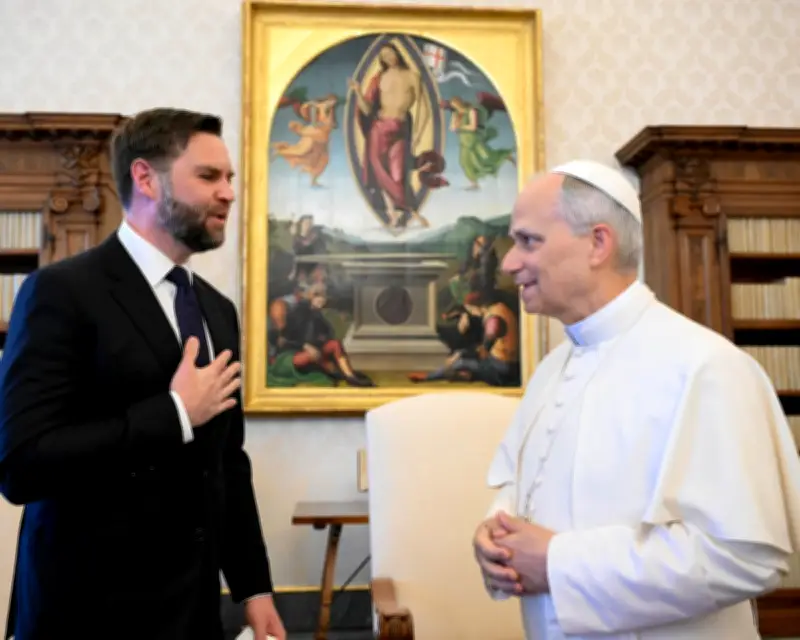
At the heart of JD Vance's new book, Communion, lies the biblical question: 'What must I do to be saved?' This is not about securing a place in heaven, but a challenge to destructive assumptions and habits endorsed by majority culture. Vance, the US vice president, chronicles his journey back to Christian faith, offering a diagnosis of modern society through the lens of addiction and its generational effects.
The personal quest for meaning
Vance describes with clarity the pervasive mechanisms in education and professional worlds that induct us into wanting what others want. He writes, 'I knew exactly how to help my kid get into a good college but was woefully underprepared to make him a good man.' This painful bafflement underscores the emptiness of status-driven ambition. Wanting what others want enslaves us to feverish work patterns that wreak havoc with family life and corrupt intellectual life, producing hyper-anxious conformity.
Return to Catholic faith
Vance's return to faith was shaped by two insights. First, he states, 'I found liberation in guilt,' emphasizing the need for a language of repentance and renewal. He is drawn to Catholicism for its emphasis on grace absorbed over a long history of learning, contrasting with the quick fixes of his evangelical childhood. The Catholic perspective also offers a social analysis beyond modern polarizations, rooted in Pope Leo XIII's vision that economic life must enable human dignity.
Critique of modern politics
Vance gives a scathing account of a conversation with a critic of US immigration policy who argues that abundant migrant labor allows employers to pay lower wages. This reveals the toxicity of profit-driven activity. Despite this, the book fails to reconcile its values with the Trump administration. Vance dismisses criticism of Trump's style as elite fastidiousness and insists on the first Trump administration's success, ignoring rampant corruption, verbal bullying, reckless foreign policies, and brutal immigration controls.
The unanswered question
The book leaves a looming question: what does this Christian vision have to do with Vance's political company? It is unlikely to appeal to the MAGA hardcore, technophile billionaires, or traditional free-market capitalists. Leftists will be alienated by his nuanced but still conservative abortion stance. Vance does not explain why he hitched his wagon to Trump, despite suggesting he would. He quotes a pastor saying to an addict, 'Show me your friends and I'll show you your future,' which applies to Vance himself.
Conclusion
Communion is not vacuous or vicious, but it does nothing to resolve the enigma of Vance's political choices. It offers a thoughtful Christian vision but is impossible to square with the company he keeps. As Rowan Williams notes in the original review, the book's content is more nuanced than expected, yet it fails to address the contradictions at its core.