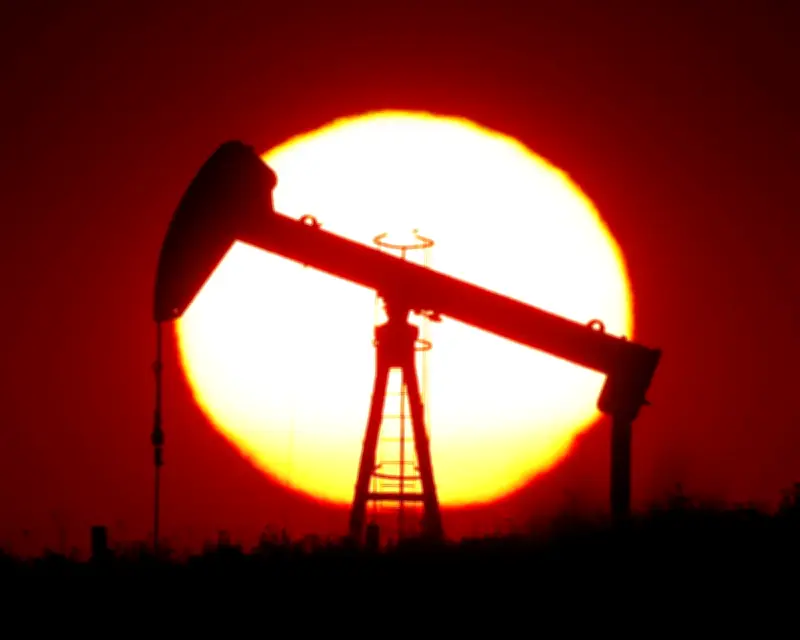
Major oil companies are planning to boost production by an average of 14% between 2024 and 2030, according to data from the TPI Global Climate Transition Centre at the London School of Economics and Political Science (LSE). This expansion comes as the world experiences record-breaking heatwaves, wildfires, and other extreme weather events linked to climate change.
Scientific consensus contradicts industry plans
There is overwhelming scientific agreement that burning fossil fuels drives global heating. A recent attribution study concluded that the "most severe and widespread heatwave to have ever affected this large a region of Europe" could not have occurred without human-caused climate change. Yet the petroleum industry is racing to extract more oil and gas, with Shell, ExxonMobil, Chevron, and seven other publicly listed firms leading the charge.
The planned increase is far worse than the International Energy Agency's (IEA) business-as-usual scenario, which projects a 5.9% rise in oil and gas production this decade, leading to a catastrophic 2.9°C global temperature increase by 2100. The IEA has stated that to align with the Paris agreement's goal of keeping heating well below 2°C, no new long-term oil and gas exploration or development projects can proceed.
Profits surge amid global crises
Oil companies have seen a surge in profits, driven by high oil prices resulting from conflicts in the Middle East, including Iran. The six European oil majors increased their combined profits by 43% in the last quarter to $22 billion, the highest since 2022. BP, for example, saw its profits more than double in the same period. However, instead of investing in renewable energy, many firms are backtracking on green commitments and ramping up production.
BP had previously pledged a 40% cut in oil and gas production and a tenfold increase in renewable energy investment under former CEO Bernard Looney, who promised the company would become "a force for good as well as a provider of competitive returns." But Looney was forced out in 2023, and BP watered down its fossil-fuel cut target to 25%. In 2024, it announced a strategic reset, slashing renewable energy investments by $3 billion and increasing oil and gas spending to $10 billion annually. Current CEO Meg O'Neill has continued this retreat, prioritizing shareholder value over environmental responsibility.
Global backtrack on climate commitments
Similar trends are evident across the industry. Norway's Equinor has raised its oil and gas output target by 6% by 2030, while Brazil's Petrobras aims to supply 21% more oil by 2030. In the US, the world's largest oil-and-gas producer, ExxonMobil plans a 25% increase and Chevron a 15% increase by 2030. Many US companies never made low-carbon commitments, and with the Trump administration supporting their interests, they have political cover to expand production.
Investors and supporters are also pushing Europe in the same direction through shareholder activism and funding for far-right politicians and thinktanks campaigning against net zero policies. This combination of higher oil prices, shifting boardroom priorities, state capture, and political cover has created a perfect storm for increased fossil fuel production.
Consequences for the planet
The expansion threatens to push the planet further from Paris agreement goals. To limit global heating to 1.5-2°C by 2100, oil output must decline this decade. Instead, the industry is moving in the opposite direction. With a new El Niño confirmed and forecast to be severe, the Amazon faces more fire and drought, polar regions will see increased ice melt, and other vital Earth systems approach dangerous tipping points.
"It never had to be this way and it does not have to be this way in the future," the article states. "Values have to change. Incentives need to shift. Fossil fuels, which were for long so beneficial to humanity, have to be recognised as poisons. And petroleum companies must pay for backtracking on their promises and putting shareholder dividends ahead of planetary health and human wellbeing."