In an ideal world, a high-quality video game would guarantee commercial success, but reality often dictates otherwise. A title's sales performance frequently hinges on its advertising rather than its merits. Even mediocre games can achieve strong launches with effective trailers and hype. Conversely, publishers like EA and Activision sometimes invest heavily in marketing but focus on the wrong aspects, misrepresenting the game's core appeal. Other times, they resort to ridiculous stunts or neglect marketing entirely for titles they expect to underperform, leaving them reliant on word of mouth. This article revisits 14 games that suffered from absent, misguided, or just plain bizarre marketing, and examines whether they managed to thrive despite these setbacks.
Nintendo's Undersold Masterpiece and Square Enix's Misstep
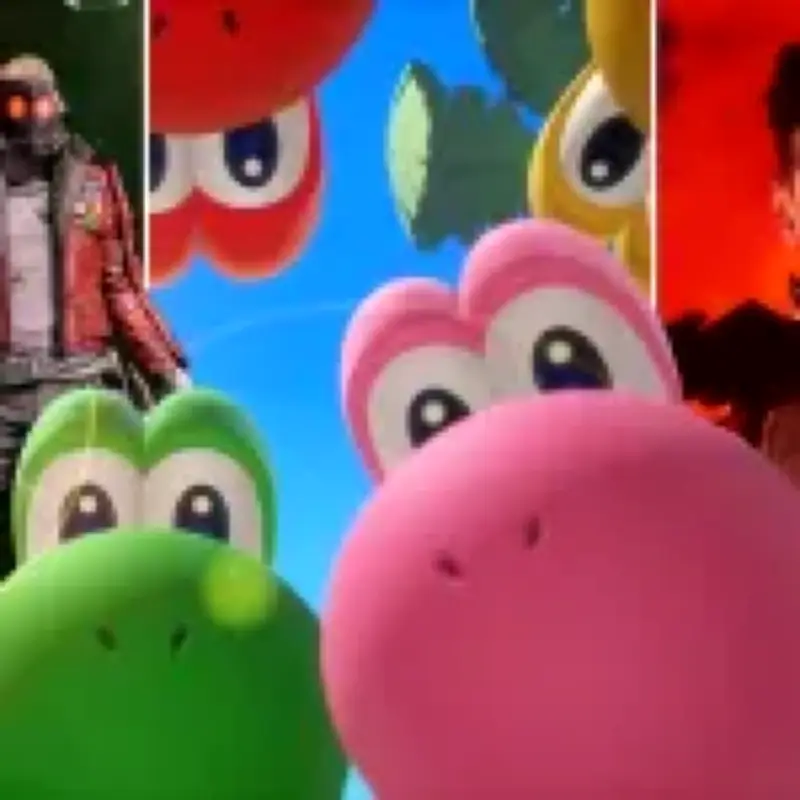
Yoshi And The Mysterious Book initially appeared to be another simplistic platformer for kids, hardly justifying a Nintendo Switch 2 purchase. However, Nintendo severely undersold the game, as its levels are delightful toy boxes full of unique gimmicks that could have been the focus of entire games, lending themselves perfectly to puzzle solving. The marketing completely ignored these best qualities, and Nintendo has still not shared sales figures, which is unusual. Despite being one of the best games of the year and releasing shortly after Yoshi's starring role in the Super Mario Galaxy movie, it is believed to have not even cracked a million sales.
After Square Enix's middling Avengers live service game, enthusiasm was low for its announcement of Marvel's Guardians Of The Galaxy, even though it promised a purely single-player experience. It was bizarre that there were no co-op options for a game about Marvel's galactic outcasts, and trailers focused too much on Star-Lord's nostalgic 80s mixtape, making it seem like a desperate recreation of the movies. Yet the game turned out to have real ambition, boasting consistently entertaining tactical combat and a sincerely heartfelt story about grief and coping with loss. Despite Eidos-Montréal's best efforts and strong word of mouth, Square Enix branded it a flop, contributing to its decision to avoid future Marvel games and sell off its Western studios. The silver lining is that the game is getting a re-release on Switch 2, announced during a recent Nintendo Direct.

Racing Games That Missed the Checkered Flag
Three British-made arcade racing games suffered from poor marketing decisions that contributed to awful sales. Onrush by Codemasters was enjoyably unique, more of a hero shooter with cars than a standard racer, with all four gameplay modes working wonderfully. Unfortunately, it was barely advertised, and some trailers made it seem generic. Split/Second: Velocity by Black Rock Studio also saw little advertising despite its great hook of triggering destructible environments mid-race. It also launched in May 2010, the same month as Red Dead Redemption and Super Mario Galaxy 2. Blur from Bizarre Creations and Activision fell into a similar trap, positioning the game as an adult rival to Mario Kart with a trailer mocking Nintendo's racer as a stupid baby game, without explaining why Blur was better.
Shooters and Reboots That Struggled
Titanfall 2 is still revered for having one of the best first-person shooter campaigns, even though very few people played it at the time. EA barely marketed the game, and what marketing existed didn't emphasize that it had a proper campaign compared to the first game's multiplayer focus. EA also launched Titanfall 2 between Battlefield 1 and Call Of Duty: Infinite Warfare, dooming it to lacklustre sales. DmC Devil May Cry, Capcom's reboot using British developer Ninja Theory and turning Dante into an unlikable git, was a bad call, especially with jokes that antagonised long-time fans. Yet the game was good, with more complex combat than given credit for, and fulfilled Capcom's aim to be a more accessible entry point. Capcom later reverted to the original continuity with Devil May Cry 5, which became the series' best-selling entry, ensuring the reboot remains a one-off.

Nintendo's Odd Marketing Choices and EA's Shock Tactics
The Kirby series is a blanket case of misguided marketing. For years, Nintendo of America marketed Kirby in the West by giving him angry eyes on box art, replacing his joyful smile with a furrowed brow and steely determination to make him seem more hardcore. The tactic may have worked, as the game is bigger in the US than Europe, but nowadays box art is the same across regions, relying on nostalgia and cuteness. God Of War 2 was sold on ultra violence, and Sony invited press to an event involving shoving hands into a dead, headless goat's carcass. Sony clarified the insides were filled with normal Greek food, but the real dead goat caused outrage, leading to an apology. The original God Of War wasn't a big hit in Europe due to rivalry between Sony Computer Entertainment America and Europe, with the latter putting little effort into pushing the first game.
The Legend Of Zelda: Ocarina Of Time has an infamous UK ad asking, 'Willst thou get the girl? Or play like one?' This fed into the stereotype that video games are only for boys, sparking a small controversy and an attempt to have the ad removed, which didn't work. It didn't hurt the launch, and the ads weren't run in other countries. Dead Space 2 saw EA run a 'Your Mum Hates Dead Space 2' campaign, recording mothers' horrified reactions to violent moments to make the game look edgy. It was tasteless and didn't help the stereotype of video games being childish, and EA branded the game a commercial failure. Dante's Inferno, a God Of War clone, saw EA stage a fake protest to capitalise on religious backlash, later confessing it was fake. The game underperformed, prompting EA to cancel a planned sequel.
Acclaim's Infamous Promotions and Their Aftermath
Burnout 2 from Acclaim offered to pay for people's speeding tickets, which made the UK government angry, as it came across as encouraging speeding. Acclaim filed for bankruptcy two years later, but EA acquired the series and developer Criterion, releasing more Burnout games. Burnout now languishes in EA's vaults, with the last game in 2018, and is unlikely to return now that Criterion has been reworked into a Battlefield 6 studio. Shadow Man 2 (or Shadow Man: 2econd Coming) had Acclaim offering families money to place billboards on dead relatives' tombstones, billed as 'deadvertising.' Acclaim argued it fit the game's dark tone and said it would 'particularly interest poorer families,' describing it as 'a subsidy to burial costs to give their loved one a good send-off.' Nobody took the offer, and the game's sales weren't strong enough to save Acclaim from bankruptcy. A new Shadow Man game, Shadowman: Darque Legacy from Blowfish Studios, was announced with a vague teaser in 2023 but has seen no updates since.